

Table of Contents
18mm film faced plywood should be evaluated against the job it needs to do. For a suspended slab with repetitive bays, the central concern is nominal thickness being treated as an allowable support span. A useful decision starts by defining the application, the acceptance basis and the evidence that connects the supplied material to the intended work. This guide focuses on checking deflection before a slab pour, with practical checks for the buyer, technical reviewer and production or construction team.
The recommended first step is to compare the delivered panel grade with the approved support drawing. Keep actual thickness distribution, panel direction and the temporary works designer's span limits in the review file. That gives an 18mm film faced plywood inquiry a concrete technical basis and makes it easier to compare offers fairly. The following steps are a planning framework; project drawings, specifications, approved mix designs and product instructions determine the actual acceptance limits.
18mm film faced plywood: material function and decision boundary
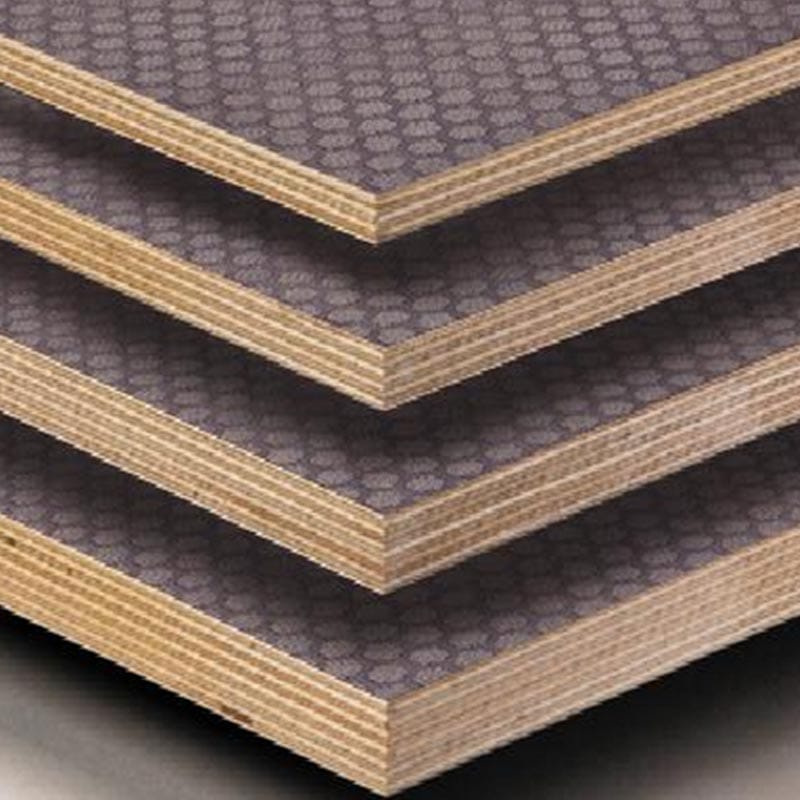
The overlay provides the concrete-contact surface, while the bonded veneer core gives the panel its structural behavior. The facing sheet works with supports, ties, walers and bracing. A sound-looking film cannot establish an allowable span, and a nominal thickness cannot establish wet-service design properties. For 18mm film faced plywood, this distinction keeps the buying question connected to the actual application.
Panel selection does not approve the temporary works. Concrete pressure, support spacing, pour sequence and stripping conditions remain part of the project formwork design. The practical 18mm film faced plywood review should therefore name the responsible approver and identify which requirements belong to the supplier, the laboratory and the project team.
Thickness and panel direction for 18mm film faced plywood
The 18mm film faced plywood review begins with this principle: Measure actual thickness at agreed positions using an appropriate instrument and record the sampling basis. The orientation of the face grain and internal veneer arrangement can affect panel response. Keep the declared grade and design information with the support drawing so that site crews do not interpret thickness as a universal span rule. A replacement panel should be reviewed against the approved combination of material, orientation and supports.
The immediate decision for 18mm film faced plywood is to compare the delivered panel grade with the approved support drawing. In this case, the relevant setting is a suspended slab with repetitive bays. Write that setting at the top of the trial or purchase brief so the team evaluates the intended duty. Keep actual thickness distribution, panel direction and the temporary works designer's span limits in the supporting record. These are the practical details needed to distinguish a suitable proposal from one that merely uses the expected product name.
Geometry before sheet price
For an 18mm film faced plywood decision, the following distinction matters. Start with the dimensions of the concrete element and the position of every panel joint. A sheet that appears economical in a quotation may leave narrow offcuts that have little reuse value. Count usable components against the drawing, including special closures and access openings. Keep cutting yield separate from the panel strength decision. Better yield cannot justify a support arrangement that the formwork designer has not approved.
A useful 18mm film faced plywood comparison should address the risk of nominal thickness being treated as an allowable support span. Ask the reviewer which observation would support acceptance and which would trigger investigation. Decide this before the results arrive. If the same observation could be explained by several process changes, preserve a control or reference condition and document the differences instead of forcing a confident product conclusion.
Core construction and edges for 18mm film faced plywood
A useful way to assess 18mm film faced plywood is to work through the process itself. A cut edge can reveal gross voids, overlapping veneers or inconsistent construction, but it is only one observation from a limited area. Record the location and size of visible irregularities rather than describing a core as good or bad without criteria. Ask for the declared construction and applicable bond evidence. Sampling a few edges is useful for screening; it does not prove that every internal bond is sound.
For a suspended slab with repetitive bays, record actual thickness distribution, panel direction and the temporary works designer's span limits before making the commercial choice. The 18mm film faced plywood file should identify the person responsible for each missing item. An unanswered technical question belongs in a visible open-item list, with a release decision attached to it. This is more useful than treating a complete-looking quotation as evidence that every application requirement has been resolved.
Overlay and concrete appearance
When specifying 18mm film faced plywood, keep this part of the evaluation explicit. The face texture, release product, concrete mixture and placing method can all influence the finished surface. Retain an agreed reference panel and a concrete mockup under controlled conditions. Evaluate seams, tie positions and repair marks as well as broad flat areas. A glossy sample board on a desk does not represent the complete forming process, especially where the owner expects consistent appearance across many pours.
The 18mm film faced plywood evaluation should separate the supplied material from the way the project uses it. Start with panel dimensions, actual thickness, core construction, overlay type, adhesive classification, support layout and concrete finish requirement. Then connect these inputs to dimensional measurements, panel identification, a representative cut edge and an agreed concrete-contact mockup. This makes the comparison reproducible and helps the team locate the source of a discrepancy. If a required input changes, review the affected result rather than assuming the earlier approval remains applicable.
Moisture exposure for 18mm film faced plywood
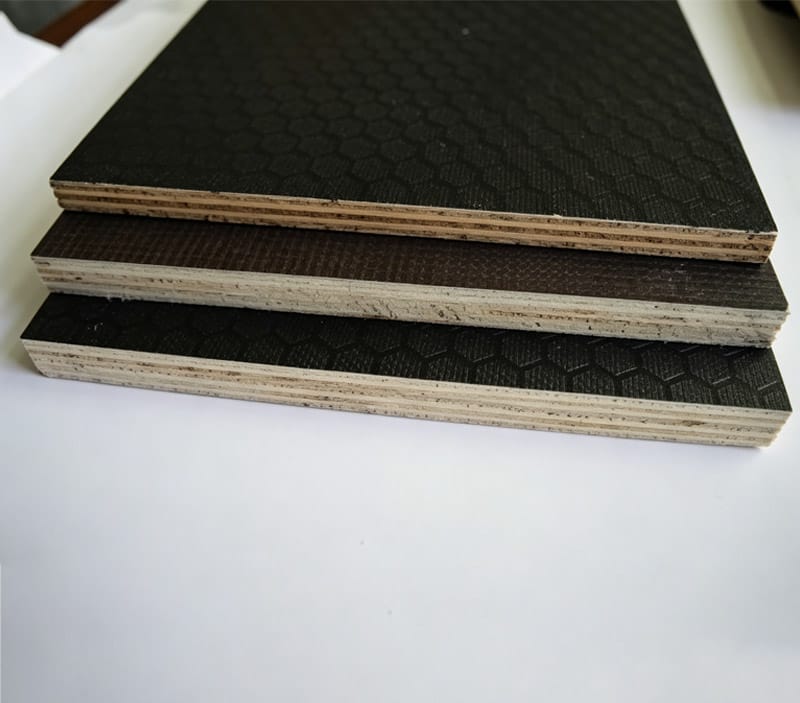
The technical file for 18mm film faced plywood should account for the following point. The overlay, bond line and exposed wood edges face different moisture pathways. Water-resistant marketing language should therefore be unpacked into specific material declarations and exposure expectations. Newly cut edges, drilled holes and damaged faces need the supplier-approved treatment where applicable. Storage and handling records help distinguish delivery damage from subsequent site exposure when the team investigates swelling or a loss of flatness.
Use the specific concern, nominal thickness being treated as an allowable support span, to choose where observation effort is most valuable. With 18mm film faced plywood, the team should be able to explain how its chosen evidence addresses that concern. A photograph, certificate and trial result answer different questions. Keep their roles clear and avoid treating a favorable result from one category as a replacement for missing evidence in another.
Release-agent compatibility
Before approving 18mm film faced plywood, connect the material evidence to this operating issue. Use a release product suited to the panel surface and the required concrete finish, following its instructions. Uneven application can complicate a finish comparison, so the trial should record coverage and application method. Keep concrete composition, vibration and stripping conditions consistent when comparing panels. If staining or surface defects appear, examine the complete contact system before assigning the cause to the facing material.
The next practical step is to compare the delivered panel grade with the approved support drawing. Assign an owner and an expected record to that action. An 18mm film faced plywood decision becomes easier to defend when the record shows the application, the material identity, the observation and the reason for release. Keep tentative assumptions separate from confirmed requirements so they can be revisited without rewriting the entire approval history.
Joint and hardware interfaces for 18mm film faced plywood
A practical 18mm film faced plywood comparison also needs the following check. Panel joints, tie openings and fastener positions should follow the form-system details. Poorly supported joints can create steps, and imperfect seals may allow paste loss. Check the assembly as an integrated system before a pour, with responsibilities allocated to the formwork crew and supervisor. Purchasing the correct panel does not compensate for a missing backing member or an unauthorized change to the fixing arrangement.
In a suspended slab with repetitive bays, a successful 18mm film faced plywood trial should be repeatable by the production or site team. Give them the relevant material codes and operating details, not just a favorable summary. Include actual thickness distribution, panel direction and the temporary works designer's span limits with the handover. Ask the receiving team to identify any difference between the demonstrated condition and the next planned use before the material is released.
Movement and component identity
The handover for 18mm film faced plywood should preserve this information. Identify cut components so the crew can return each piece to its intended location or approved equivalent position. Protect corners and faces during internal transport, especially when panels move with other equipment. Avoid unsupported local stacking and dragging. A simple location register becomes valuable on repetitive projects because it allows damage and finish observations to be traced to the same panel over several uses.
When comparing offers for 18mm film faced plywood, ask each supplier for evidence on the same basis. The priority here is actual thickness distribution, panel direction and the temporary works designer's span limits. If one offer omits an item, record it as missing rather than interpreting a blank as compliance. A technically incomplete offer may need clarification before its price can be compared fairly with an offer that includes the full requirement.
Cleaning and next-use decisions for 18mm film faced plywood
The release decision for 18mm film faced plywood depends on a clear record. Remove concrete residue using a method compatible with the overlay, and inspect the face and edges before the next allocation. Separate repairable cosmetic damage from damage that affects the approved use. Establish who may release a repaired panel and what evidence that person needs. A fixed reuse count is a planning assumption; observed condition and the project acceptance requirements determine whether a particular panel remains suitable.
Close the 18mm film faced plywood review with a stated disposition: approved for the defined condition, approved with recorded limitations, or held for further evidence. The unresolved risk is nominal thickness being treated as an allowable support span. The record should show how that risk was addressed and who accepted any remaining limitation. Preserve the earlier version whenever a source, recipe, drawing or process change requires a fresh decision.
Compare 18mm film faced plywood options on a common basis
Use this comparison to prepare an 18mm film faced plywood review. The right-hand column identifies evidence to request; it does not assert that a particular supplier has already met the requirement.
| Comparison point | Incomplete buying approach | Evidence-based project approach |
|---|---|---|
| Application | Use the product name as the entire specification | A suspended slab with repetitive bays; document the actual duty |
| Technical basis | Compare isolated catalogue claims | Actual thickness distribution, panel direction and the temporary works designer's span limits |
| Primary risk | Assume a favorable headline resolves the issue | Nominal thickness being treated as an allowable support span; define a check for this risk |
| Material identity | Accept a similar description as equivalence | Identify the exact product, lot and relevant configuration |
| Quantity and cost | Compare invoice price without a common basis | Sheet size and thickness, together with the area of accepted concrete surface |
| Release decision | Move directly from sample to normal use | Compare the delivered panel grade with the approved support drawing; record the approval conditions |
A worked 18mm film faced plywood decision sequence
Consider a planning example involving a suspended slab with repetitive bays. The team has an existing approved arrangement and a proposed change involving 18mm film faced plywood. This is an illustrative decision exercise, not a reported Luxin customer project. Before comparing prices or isolated test numbers, the team writes down the service requirement and the concern: nominal thickness being treated as an allowable support span. It keeps the approved arrangement as the reference unless the project reviewer requires a different comparison.
The comparison file then gathers actual thickness distribution, panel direction and the temporary works designer's span limits. Each record is linked to the actual sample, batch, panel or work area so that an attractive result cannot be detached from its conditions. Where the two options differ in more than one respect, those differences are listed explicitly. For 18mm film faced plywood, the review should explain whether the observed outcome supports the intended change or whether a further controlled check is needed.
The decision is to compare the delivered panel grade with the approved support drawing. If a required item is missing, the proposed change remains conditional and the team records what would resolve it. If the evidence is adequate, the release identifies the approved product and operating condition. The value of this example is the sequence: define the question, collect comparable evidence, decide within the evidence scope, and preserve a record that the next operator can use.
Questions to resolve before releasing the order
- What drawing controls the panel support arrangement?
- Which face and joint details define the accepted finish?
- How will cut components remain traceable?
- Which damage requires repair or removal from service?
- Who can approve a different panel grade?
Product information and technical reading
Review the Luxin film faced plywood product page for the current offered range, then request the configuration and documents relevant to 18mm film faced plywood. The applications overview provides context for infrastructure use. Website descriptions should be confirmed against the actual quotation and project requirements.
For background, consult APA concrete-forming guidance. APA describes plywood products intended for concrete forming. Product grade and form-system design still need separate confirmation. This reference supports the stated background point and is not a product endorsement, certification or substitute for the project specification.
Request an 18mm film faced plywood project review
To discuss 18mm film faced plywood, send Luxin the application, quantity, delivery destination and the evidence needed to compare the delivered panel grade with the approved support drawing. Include the relevant drawings or mixture requirements where available. Use the form below or the contact page to request a product proposal, supporting documents and quotation.
Frequently asked questions
What should buyers decide first about 18mm film faced plywood?
Start with the actual application and the decision to compare the delivered panel grade with the approved support drawing. The relevant setting is a suspended slab with repetitive bays. Define the required outcome before comparing suppliers, because a product description alone does not establish suitability for a particular drawing, mixture or operating process.
Which records matter most for 18mm film faced plywood in this case?
Prioritize actual thickness distribution, panel direction and the temporary works designer's span limits. Keep each item linked to the material or trial it describes. Product identification, process observations and application results provide different forms of evidence, so the approval file should show which requirement each record addresses.
Can a data sheet alone approve 18mm film faced plywood?
No. A data sheet is a useful starting point for identifying the proposed material and its declared properties. Panel selection does not approve the temporary works. Concrete pressure, support spacing, pour sequence and stripping conditions remain part of the project formwork design. The responsible reviewer should identify the remaining project evidence and record any limitation before the material enters normal use.
How should an 18mm film faced plywood result that differs from the control be investigated?
First confirm the identity, preparation and conditions of both comparisons. The concern here is nominal thickness being treated as an allowable support span. Check whether more than one variable changed and preserve the original records. Repeat or extend the investigation where necessary instead of attributing every difference immediately to the product.
What should an 18mm film faced plywood inquiry to Luxin include?
Include the intended use of 18mm film faced plywood, project location, estimated quantity, delivery destination and the evidence required by the reviewer. Add panel dimensions, actual thickness, core construction, overlay type, adhesive classification, support layout and concrete finish requirement. Ask Luxin to confirm the offered configuration and supporting documents rather than assuming that a general website description is a project-specific guarantee.