

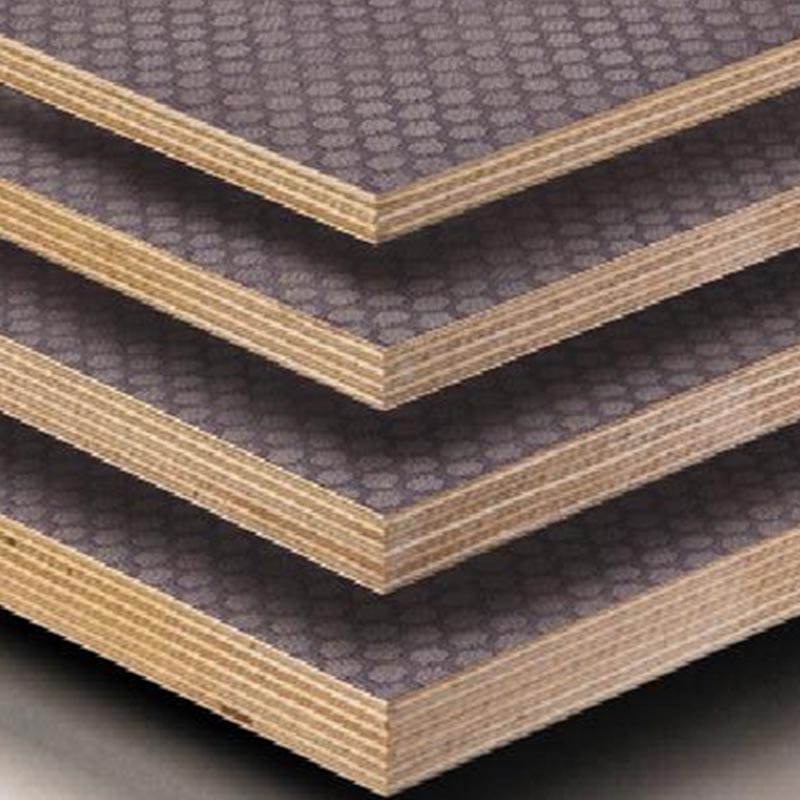
In concrete construction, formwork is often treated as a temporary jobsite material. However, the quality of the formwork panel directly affects concrete surface finish, demolding efficiency, panel reuse, labor workload, and project consistency. This is why film faced plywood has become a practical choice for contractors, formwork suppliers, infrastructure buyers, and construction material distributors who need a smoother forming surface and more predictable jobsite performance.
Unlike ordinary plywood, film faced plywood is designed with a coated surface that helps resist moisture, reduce concrete adhesion, and support cleaner demolding. For concrete walls, columns, beams, slabs, bridge structures, tunnels, and municipal projects, this can make a noticeable difference in surface appearance and formwork handling.
This guide explains how to choose film faced plywood from a practical construction perspective: not only by thickness or size, but also by surface quality, core structure, adhesive performance, edge sealing, reuse planning, and common defect prevention.
Table of Contents
Why Film Faced Plywood Is Important in Concrete Formwork
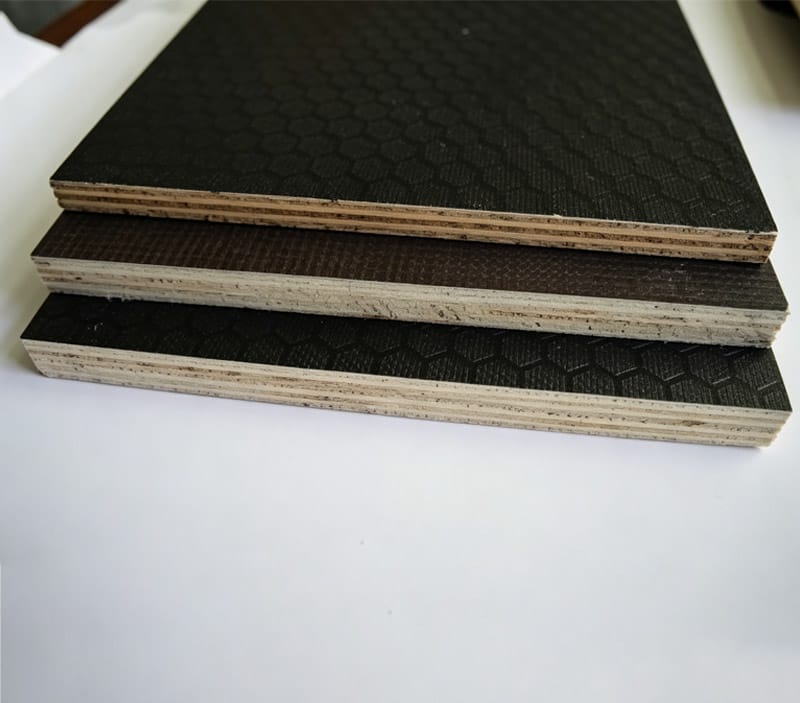
Concrete formwork has one simple purpose: hold fresh concrete in the correct shape until it gains enough strength. But in real projects, the panel must do much more than hold shape. It must resist moisture, stay dimensionally stable, release cleanly, support repeated pouring cycles, and help create an acceptable concrete surface.
A good film faced plywood panel can help reduce several common jobsite problems:
- Concrete sticking to the panel surface
- Rough or uneven concrete surface finish
- Excessive cleaning time after demolding
- Surface scratching and early panel wear
- Edge swelling caused by moisture exposure
- Panel deformation during repeated use
- Unstable reuse performance from batch to batch
For contractors, these issues are not small details. They affect productivity, finishing work, material waste, and project delivery. For importers and distributors, they also affect customer satisfaction and repeat orders.
When selected correctly, film faced plywood for concrete formwork can support smoother demolding, cleaner concrete surfaces, and more efficient formwork cycles.
What Makes Film Faced Plywood Different from Ordinary Plywood
The main difference is the surface system. Film faced plywood is coated with a protective film, commonly phenolic or melamine-based, that improves surface smoothness and resistance to moisture and abrasion. Ordinary plywood does not provide the same level of demolding performance or jobsite durability.
In concrete formwork, the panel is exposed to wet concrete, alkaline cement slurry, vibration, impact, cutting, nailing, cleaning, storage changes, and repeated handling. A standard plywood sheet may absorb moisture more easily, stick to concrete, swell at the edges, or leave a rougher concrete finish.
Film faced plywood is built for this harsher environment. The surface film acts as a barrier between the plywood core and the concrete. The core structure provides panel strength, while the adhesive system helps maintain bonding stability when the panel is exposed to moisture.
For buyers who need consistent forming performance, the key is not simply asking for “plywood.” The better question is: what surface film, core material, glue type, thickness, edge treatment, and quality control standard does the project require?
Key Applications of Film Faced Plywood in Construction
Film faced plywood is widely used in concrete forming work because it can be cut, nailed, drilled, installed, stripped, cleaned, and reused according to site needs. Its flexibility makes it suitable for different concrete structures and project scales.
Common applications include:
| Application Area | Why Film Faced Plywood Is Used | Buyer Priority |
|---|---|---|
| Wall formwork | Helps create smoother vertical concrete surfaces | Surface finish and panel flatness |
| Column formwork | Supports stable shaping and cleaner demolding | Strength and dimensional stability |
| Beam and slab formwork | Handles repeated installation and removal | Thickness and load support |
| Stair formwork | Can be cut and processed for complex shapes | Workability and edge sealing |
| Bridge structures | Suitable for infrastructure concrete forming | Durability and moisture resistance |
| Tunnel and municipal projects | Performs in demanding jobsite environments | Core quality and adhesive performance |
| Precast concrete | Supports repeated forming and cleaner surfaces | Reuse performance and surface consistency |
The product can also be used together with other construction and infrastructure materials from Luxin’s product category pages when buyers need a broader supply solution.
How Film Faced Plywood Helps Reduce Concrete Surface Defects
Surface defects are one of the biggest reasons contractors look for better formwork panels. A poor panel surface can increase concrete sticking, create uneven textures, leave marks, or require extra finishing after form removal.
Film faced plywood helps reduce these risks in several ways.
First, the smooth film surface reduces direct adhesion between concrete and the plywood face. This helps the panel release more cleanly after curing. Second, the coated surface helps limit water absorption from wet concrete, reducing the risk of swelling and surface damage. Third, a stable core helps the panel remain flatter and more reliable during installation.
However, the panel alone cannot solve every defect. Concrete mix quality, release agent application, vibration practice, formwork alignment, stripping timing, cleaning method, and storage conditions all affect the final surface. The best results come from matching a suitable film faced plywood panel with good jobsite control.
For general technical understanding of panel use in concrete forming, buyers can also review industry information about concrete form panels.
Film Surface: The First Detail Buyers Should Check
The film surface is the part of the panel that directly contacts the concrete. It influences demolding, surface smoothness, scratch resistance, moisture resistance, and reuse potential.
When evaluating film faced plywood, check these surface factors:
Surface smoothness: The surface should be even, clean, and free from visible wrinkles, bubbles, cracks, or uneven coating.
Film bonding: The film should be well bonded to the plywood surface. Poor bonding may lead to peeling or early surface failure.
Film type: Phenolic film is commonly selected for more demanding formwork conditions because it provides better resistance to moisture and wear than basic surface coatings.
Surface hardness: A harder, more wear-resistant surface can better handle repeated use, cleaning, and concrete contact.
Color consistency: Black and brown film faced plywood are both common. Color alone does not determine quality; buyers should focus on film quality, core strength, glue type, and performance requirements.
A smooth surface is useful, but it should not be the only decision factor. A beautiful surface on a weak core may still fail early on site.
Core Material and Panel Strength Matter More Than Appearance
Many buyers focus first on surface color and thickness, but the core is just as important. The core determines how well the panel resists bending, splitting, warping, nail pull-out, and repeated handling.
Common core options include poplar, eucalyptus, hardwood, and combined core structures. Each option has different advantages. A lightweight core may be easier to handle, while a stronger hardwood or eucalyptus core may provide better durability for demanding applications.
When checking core quality, buyers should pay attention to:
- Veneer overlap and gaps
- Core uniformity
- Bonding strength between layers
- Panel flatness
- Edge density
- Resistance to splitting during cutting or nailing
- Dimensional stability after moisture exposure
For large construction projects, bridge formwork, tunnel work, and repeated-use formwork systems, the core structure should be selected based on actual loading conditions and reuse expectations.
Thickness Selection: 12mm, 15mm, 18mm and Beyond
Thickness affects panel stiffness, load-bearing ability, support spacing, handling weight, and reuse behavior. Common film faced plywood thicknesses include 12mm, 15mm, and 18mm, though custom thicknesses may be required for specific projects.
A thinner panel may be easier to cut and handle, but it may require closer support spacing. A thicker panel can provide better stiffness and stability, especially for slabs, beams, and heavy-duty formwork systems.
Use the table below as a general selection reference:
| Thickness Option | Common Use Case | Key Consideration |
| 12mm | Light-duty formwork, small structures, short-cycle projects | Requires proper support spacing |
| 15mm | General building formwork, walls, columns, beams | Balanced handling and stiffness |
| 18mm | Slab formwork, heavy-duty structures, repeated use | Better stiffness and durability |
| Custom thickness | Special formwork systems or project-specific needs | Confirm drawings and load requirements |
Thickness should never be selected alone. The right choice depends on formwork design, support layout, concrete pressure, reuse target, and project specifications.
Adhesive and Moisture Resistance: The Hidden Performance Factor
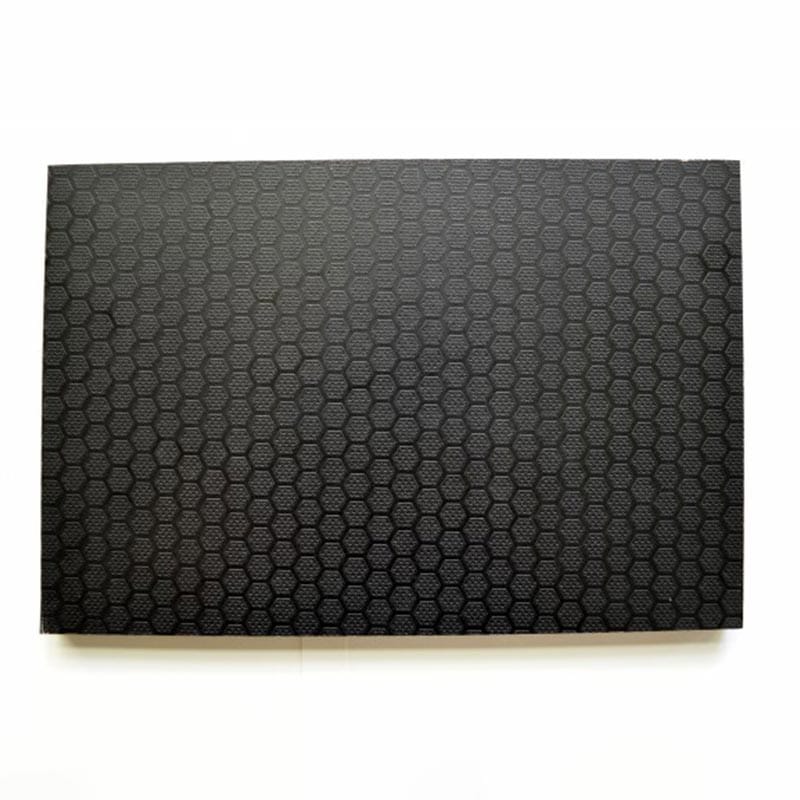
Film faced plywood is repeatedly exposed to moisture from wet concrete, site cleaning, rain, humidity, and storage conditions. If the adhesive system is weak, the panel may delaminate, swell, or lose structural integrity.
For concrete formwork plywood, waterproof adhesive is an important selection factor. Better adhesive performance supports stronger bonding between veneers and helps the panel maintain stability during repeated use.
Buyers should ask suppliers about:
- Glue type
- Moisture resistance level
- Bonding consistency
- Delamination control
- Edge sealing options
- Test data or product specifications
- Recommended use conditions
Moisture resistance is especially important for infrastructure projects, outdoor sites, rainy regions, and long-distance export transportation. A panel that performs well in a dry sample inspection may still fail if adhesive quality is not stable.
Edge Sealing and Cutting: A Common Cause of Early Failure
Even when the surface film is good, cut edges can become weak points. Once a panel is cut, drilled, or damaged on site, exposed wood fibers may absorb moisture. This can lead to swelling, edge cracking, and delamination.
To reduce this risk, contractors should seal cut edges before repeated use. Edge sealing helps protect the plywood core from moisture and cement slurry. It is especially important when panels are cut into smaller sizes, used for complex formwork shapes, or exposed to wet conditions.
Practical edge-care tips include:
- Seal newly cut edges before concrete pouring
- Avoid leaving cut panels directly on wet ground
- Repair damaged edges when possible
- Remove nails carefully to reduce edge splitting
- Store panels flat and dry after cleaning
- Separate damaged panels from reusable panels
For distributors, edge quality is also an important inspection point before shipment. Clean edges, stable bonding, and suitable packaging help reduce complaints during import and jobsite use.
How to Improve Reuse Times Without Damaging the Panel
Film faced plywood can be reused, but the actual number of uses depends on product quality and jobsite management. Two panels with similar appearance may perform very differently if one is handled carefully and the other is dragged, scratched, over-nailed, poorly cleaned, or stored in standing water.
To improve reuse performance:
Clean panels soon after demolding. Do not allow hardened concrete residue to remain on the surface for too long.
Use a suitable release agent. A release agent helps reduce sticking and makes cleaning easier. It should be applied evenly and according to the project’s requirements.
Avoid aggressive scraping. Metal tools can damage the surface film. Surface scratches reduce future demolding performance.
Stack panels correctly. Store them flat, supported, and protected from direct rain or standing water.
Rotate panels by condition. Use newer panels for visible concrete surfaces and older panels for less demanding areas.
Inspect before reuse. Remove panels with deep cracks, severe swelling, delamination, or unsafe deformation.
The goal is not simply to reuse panels as many times as possible. The goal is to maintain safe formwork performance and acceptable concrete surface quality throughout the planned use cycle.
Common Film Faced Plywood Problems and How to Prevent Them
Film faced plywood problems often come from a combination of material selection and jobsite handling. Understanding the cause helps buyers choose better panels and helps contractors use them more effectively.
| Problem | Possible Cause | Prevention Method |
| Concrete sticking | Poor surface quality, uneven release agent, delayed stripping | Use suitable film surface and apply release agent evenly |
| Surface scratches | Rough cleaning, dragging panels, sharp tools | Clean carefully and avoid metal scraping |
| Edge swelling | Unsealed cut edges or wet storage | Seal cut edges and store panels properly |
| Delamination | Weak adhesive, high moisture exposure, poor handling | Choose stable glue quality and protect panels from water |
| Warping | Uneven storage, moisture imbalance, weak core | Store flat and keep panels dry |
| Uneven concrete finish | Damaged surface or inconsistent panel quality | Inspect panels before installation |
| Low reuse performance | Poor product match or careless jobsite handling | Match grade to project requirements and control handling |
This type of problem-solving angle can also help procurement teams evaluate suppliers more effectively. Instead of only asking for sheet size and thickness, buyers should ask how the panel is designed to prevent specific jobsite problems.
Black Film Faced Plywood vs Brown Film Faced Plywood
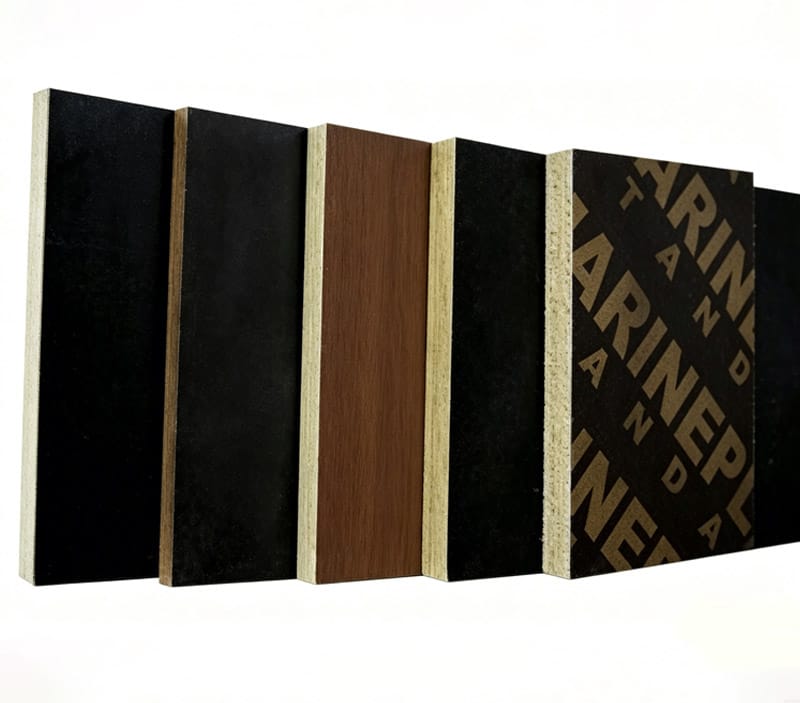
Black and brown film faced plywood are both widely used in concrete formwork. Many buyers ask which one is better, but color itself is not the most important quality indicator.
Black film faced plywood is commonly used in general construction markets and is often selected for building formwork, walls, columns, and slab work. Brown film faced plywood is also common and may be selected based on project preference, market requirements, or supplier specification.
The better question is not “black or brown?” The better question is:
- What is the film quality?
- What is the core material?
- What adhesive is used?
- What thickness is required?
- What surface finish does the project need?
- How many uses are expected?
- How will the panels be stored and maintained?
A high-quality black panel can outperform a low-quality brown panel, and a high-quality brown panel can outperform a weak black panel. Buyers should judge by technical performance, not color alone.
Film Faced Plywood Specification Checklist for Buyers
Before placing an order, buyers should prepare a clear specification sheet. This reduces misunderstanding and helps suppliers recommend the correct grade.
A practical film faced plywood inquiry should include:
- Product name: film faced plywood for concrete formwork
- Standard size or custom size
- Required thickness
- Film color
- Film type
- Core material preference
- Glue type
- Surface finish requirement
- Expected reuse condition
- Project application
- Quantity requirement
- Packaging requirement
- Destination market
- Required technical documents
- Special cutting or customization needs
For B2B procurement, clear specifications help avoid quality mismatch. A supplier can only recommend the right panel when the project requirements are specific enough.
Buyers who need customized sheet size, film color, thickness, core material, packaging, or export support can contact Luxin through the Contact Us page.
Why Film Faced Plywood Is Suitable for Infrastructure Projects
Infrastructure projects often require stronger and more stable formwork materials than small building projects. Bridge piers, tunnels, culverts, municipal structures, retaining walls, drainage systems, and water conservancy works may involve more demanding site conditions.
Film faced plywood is suitable for these projects because it offers:
- Smooth forming surface
- Practical moisture resistance
- Stronger reuse potential than ordinary plywood
- Easy cutting and installation
- Flexible use across different concrete structures
- Better support for visible concrete surfaces
- Suitable packaging and supply for project procurement
Luxin’s construction and infrastructure material portfolio also includes roadway additives, fibers, and concrete-related materials. For buyers handling both concrete construction and road engineering supply, this wider product structure can support more complete procurement planning through the Roadway Material Additives category and related product pages.
For broader background on plywood as an engineered wood product, readers may also refer to plywood information from Wikipedia.
How to Evaluate a Film Faced Plywood Supplier
A reliable film faced plywood supplier should not only provide a product name. The supplier should understand formwork use, construction requirements, export packaging, and project-based quality control.
When evaluating a supplier, check whether they can provide:
- Clear product specifications
- Stable core and adhesive options
- Custom thickness and size support
- Surface and edge quality control
- Practical packaging for shipment
- Technical communication before ordering
- Application guidance for construction buyers
- Fast response for project inquiries
For contractors, this reduces the risk of receiving panels that look acceptable but fail during actual use. For distributors, it helps build trust with customers who need repeat supply.
FAQ
What is film faced plywood used for?
Film faced plywood is mainly used for concrete formwork and shuttering. It acts as a temporary mold for fresh concrete and helps create a smoother concrete surface after demolding. It is commonly used for walls, columns, beams, slabs, bridges, tunnels, and municipal projects.
Is film faced plywood better than ordinary plywood for formwork?
Yes, for concrete formwork applications, film faced plywood is usually more suitable because its coated surface helps resist moisture, reduce sticking, and improve demolding. Ordinary plywood may absorb moisture more easily and may not provide the same surface finish or reuse performance.
What thickness of film faced plywood is commonly used?
Common thicknesses include 12mm, 15mm, and 18mm. The best thickness depends on formwork design, support spacing, concrete pressure, project application, and expected reuse conditions. Buyers should confirm thickness based on engineering and jobsite requirements.
Why does film faced plywood delaminate?
Delamination may happen because of weak adhesive, poor bonding, excessive moisture exposure, unsealed cut edges, rough handling, or unsuitable storage. Choosing stable adhesive quality and protecting panel edges can help reduce the risk.
Can film faced plywood be customized?
Yes. Film faced plywood can often be customized by thickness, sheet size, film color, core material, glue type, packaging, and project requirements. Buyers should provide detailed specifications before ordering to ensure the product matches the application.
Conclusion
Film faced plywood is more than a temporary formwork sheet. It is a practical construction material that affects concrete surface quality, demolding efficiency, reuse performance, and jobsite productivity. For contractors and B2B buyers, the best panel is not simply the thickest or the smoothest-looking option. It is the panel that matches the project’s surface finish requirement, loading condition, moisture exposure, reuse target, and procurement standard.
When choosing film faced plywood, focus on surface film quality, core structure, adhesive performance, edge sealing, thickness selection, and supplier reliability. A clear specification checklist can help avoid quality mismatch and improve project results.
Need Help Choosing the Right Film Faced Plywood?
If you are unsure which film faced plywood specification is best for your concrete formwork, building project, or infrastructure application, Luxin Material can help. Contact us today for product specifications, customization support, and project-based selection guidance. Get the right panel before construction starts, and make your formwork process smoother, cleaner, and more reliable.