

Basalt fiber reinforced concrete is attracting increasing attention in pavements, bridge structures, precast elements, industrial floors, and infrastructure exposed to cracking, temperature cycling, moisture, and repeated loading.
The reason is not simply that basalt fiber has high tensile strength. The real engineering value comes from how short, dispersed fibers interact with developing microcracks inside concrete. When fiber length, dosage, concrete workability, mixing sequence, and curing are properly coordinated, the fibers can help improve crack control, toughness, tensile behavior, and durability.
However, basalt fiber is not a material that can simply be added to an existing concrete recipe without verification. Excessive dosage can reduce workability. Poor mixing can create fiber clusters. An unsuitable fiber length can interfere with aggregate movement. Even a well-designed mixture can underperform if fibers are stored incorrectly or distributed unevenly.
This guide explains basalt fiber reinforced concrete from the perspective of contractors, concrete producers, engineers, distributors, and B2B material buyers who need to move from laboratory selection to reliable field production.
Оглавление
What Is Basalt Fiber Reinforced Concrete?
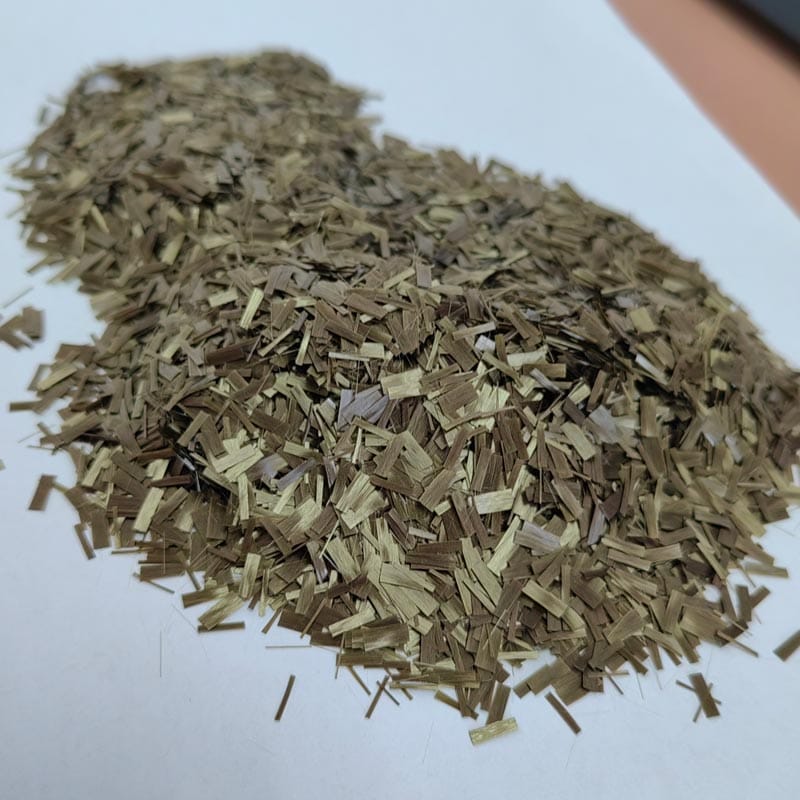
Basalt fiber reinforced concrete is concrete containing short basalt fibers distributed throughout the cementitious matrix.
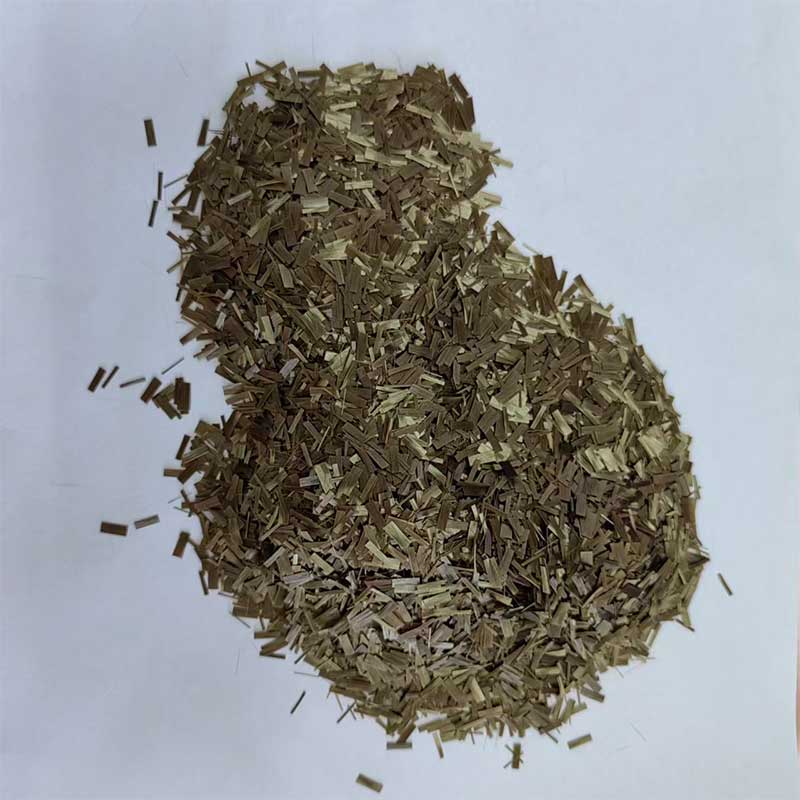
Basalt fiber is produced by melting naturally occurring basalt rock and drawing the molten material into fine fibers. For concrete reinforcement, these fibers are cut into selected lengths and introduced during batching.
Unlike reinforcing bars, which strengthen concrete at specific locations, short fibers are distributed throughout the matrix.
This creates many small reinforcement points capable of intersecting cracks in different directions.
The primary purpose of basalt fiber reinforced concrete is therefore not to turn concrete into an uncrackable material. Instead, fibers can influence how cracks initiate, spread, and widen.
Crack Bridging
As concrete hardens and enters service, very small cracks may form because of shrinkage, thermal movement, loading, moisture changes, or internal stresses.
When a crack intersects a basalt fiber, the fiber can transfer stress across the opening.
Instead of allowing one crack to grow rapidly, well-distributed fibers may help spread stresses across a larger area.
Distributed Reinforcement
Traditional reinforcement is positioned according to structural design.
Short basalt fibers behave differently because they are dispersed within the mixture.
Their effectiveness therefore depends heavily on:
- Fiber concentration
- Длина волокна
- Fiber orientation
- Bond with the cementitious matrix
- Uniform distribution
- Concrete strength
- Crack width
This is why the engineering performance of basalt fiber reinforced concrete cannot be evaluated by fiber tensile strength alone.
Why Basalt Fiber Is Used in Concrete
Concrete has excellent compressive capacity but relatively limited tensile resistance.
Cracks can develop long before a structure experiences compressive failure.
Basalt fibers are mainly considered where improved tensile behavior, crack control, toughness, and durability are desirable.
Crack Resistance
One of the most practical reasons to use basalt fiber is to control the development of small cracks.
Fibers distributed through the concrete can bridge microcracks and help limit crack propagation.
This can be especially relevant in:
- Concrete pavements
- Bridge decks
- Промышленные полы
- Precast panels
- Repair materials
- Tunnel applications
- Airport pavement
- Municipal infrastructure
Tensile and Flexural Performance
The effect of basalt fiber on compressive strength can vary depending on fiber dosage and mix design.
For many projects, the more important benefits are related to splitting tensile strength, flexural behavior, toughness, and resistance after cracking begins.
A comprehensive research review of fresh, mechanical, and durability properties of basalt fiber reinforced concrete discusses how fiber dosage and length can influence these different performance characteristics.
Resistance to Environmental Exposure
Infrastructure concrete may experience water penetration, freeze-thaw cycling, sulfate exposure, temperature fluctuations, and other aggressive conditions.
Recent research continues to study how basalt fibers influence permeability, pore structure, cracking, and durability under these environments.
A review of basalt fiber reinforced concrete durability examines performance under several complex exposure conditions.
Which Basalt Fiber Properties Matter Most?
A purchasing specification should never say only “basalt fiber.”
Several physical properties influence how a fiber performs during mixing and after concrete hardens.
Длина волокна
Fiber length affects crack bridging and mixing behavior.
Longer fibers may cross wider cracks and create stronger interaction with the surrounding matrix. However, excessively long fibers can increase the risk of entanglement and poor dispersion.
Shorter fibers generally disperse more easily but provide different anchorage and crack-bridging behavior.
The appropriate length should therefore be selected according to:
- Aggregate size
- Concrete type
- Mixer configuration
- Дозировка волокна
- Element thickness
- Цель производительности
The available basalt fiber for concrete and pavement reinforcement includes technical parameters for fiber length, diameter, tensile strength, modulus, moisture, and heat resistance that can be reviewed during material selection.
Fiber Diameter
Diameter affects the number of fibers present at a given mass dosage and influences surface area and interaction with concrete.
Fine fibers can provide a greater number of individual reinforcing elements, but handling and dispersion also need to be considered.
Прочность на растяжение
High fiber tensile strength is valuable only when the fiber can develop sufficient bond with the concrete matrix.
If the fiber pulls out before meaningful stress transfer occurs, simply selecting a higher tensile-strength material may not produce the expected improvement.
Elastic Modulus
Fiber modulus influences how stress is transferred between concrete and fibers.
A suitable modulus helps fibers participate in resisting deformation as cracks begin to form.
Moisture Content
Dry material is important for consistent feeding and storage.
Fiber exposed to moisture may form clusters, become more difficult to meter, or introduce additional variability into concrete production.
For bulk procurement, moisture protection should be considered part of product quality rather than merely a packaging issue.
How Fiber Length Changes Concrete Performance
Choosing the correct length is one of the most important decisions in basalt fiber reinforced concrete.
There is no single ideal fiber length for every project.
Short Fibers
Short basalt fibers generally provide easier dispersion.
They can create a large number of reinforcement points and may be useful for controlling very small cracks.
They are commonly considered where mixing consistency and fine crack control are priorities.
Longer Fibers
Longer fibers can provide greater embedment length and potentially stronger crack bridging.
However, longer material can also:
- Reduce workability
- Interfere with aggregate movement
- Increase fiber entanglement
- Require longer mixing
- Create finishing challenges
Match Fiber Length to Aggregate Size
Fiber length should be considered together with the maximum aggregate size.
A fiber that works well in mortar or fine concrete may behave differently in a coarse-aggregate pavement mixture.
Laboratory trials should verify that the selected fiber disperses uniformly without forming clusters or significantly disrupting the aggregate skeleton.
How Much Basalt Fiber Should Be Added?
There is no universal dosage for basalt fiber reinforced concrete.
Published studies use different fiber contents because researchers are testing different concrete strengths, fiber lengths, fiber diameters, aggregate systems, and performance objectives.
For a commercial project, dosage should be confirmed through testing rather than copied from an unrelated study.
Why Low Dosage Can Be Ineffective
If the fiber content is too low, there may not be enough fibers crossing potential crack planes to produce the required reinforcement effect.
The mixture may remain easy to place, but the expected improvement in toughness or crack control may be limited.
Why Excessive Dosage Can Create Problems
Increasing fiber content continuously does not guarantee continuously improving performance.
At excessive dosage, basalt fiber reinforced concrete may experience:
- Reduced slump
- Poor flow
- Fiber clustering
- Сложная накачка
- Uneven finishing
- Increased entrapped air
- Inconsistent compaction
- Lower production efficiency
These effects can offset some of the intended reinforcement benefits.
Find the Optimum Rather Than the Maximum
A better approach is to compare several trial dosages.
For example, laboratory trials can evaluate:
- Control concrete without fiber
- Low fiber dosage
- Intermediate dosage
- Higher dosage
The engineer can then compare workability, compressive strength, tensile strength, flexural performance, crack behavior, and durability indicators.
The optimum dosage is the level that meets the required performance while remaining practical to mix and place.
Why Workability Changes After Basalt Fiber Is Added
One of the most commonly reported production changes in basalt fiber reinforced concrete is reduced workability.
Fibers create additional internal surface area and interfere with the free movement of aggregate and mortar.
As fiber content increases, concrete can become more cohesive and less fluid.
Do Not Automatically Add More Water
The first reaction on site is sometimes to add additional water.
That can create a larger problem.
Uncontrolled water addition changes the water-to-cementitious-material ratio and may affect:
- Strength
- Permeability
- Усадка
- Durability
- Bleeding
- Surface quality
Instead, workability should be managed through the approved concrete mix design.
Where a compatible admixture is required, a suitable порошкообразный водопонижатель can be evaluated as part of laboratory trial mixing.
The fiber and admixture combination should be tested together before large-scale placement.
Aggregate Grading Still Matters
Poor aggregate grading cannot be corrected simply by using fibers or additional admixture.
A stable basalt fiber reinforced concrete mixture still requires suitable proportions of coarse aggregate, fine aggregate, paste, water, and admixtures.
Fiber should complement the mixture rather than compensate for a poorly designed base concrete.
How to Prevent Basalt Fiber Clumping
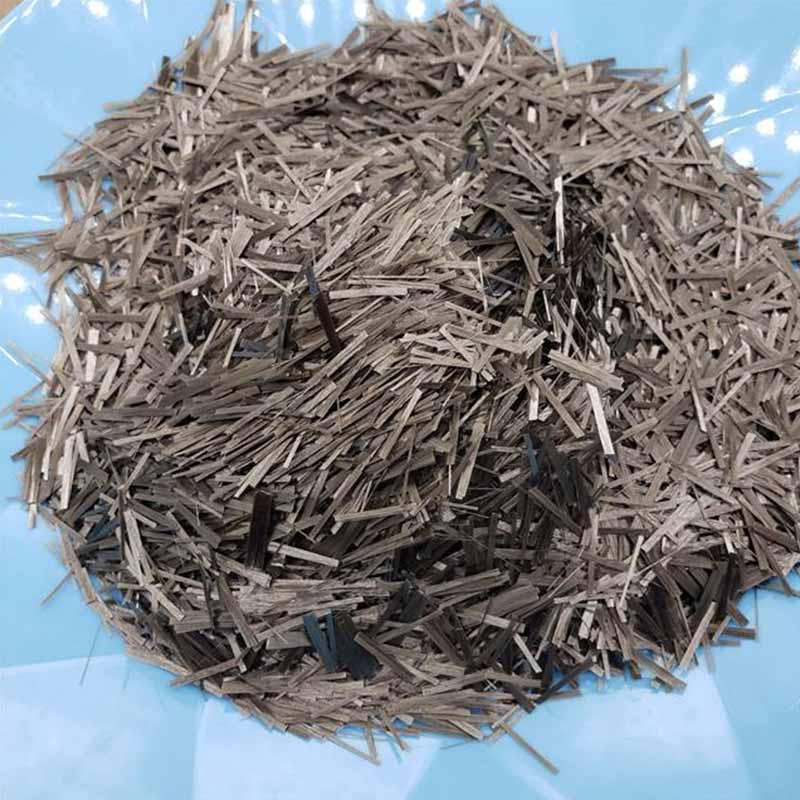
Fiber clumping is one of the most important field risks.
When fibers remain grouped together, they do not provide uniform reinforcement.
A large fiber ball can actually create a weak or poorly compacted zone.
Typical Causes of Fiber Clumping
Clumping may occur when:
- Fiber is added too quickly
- Large bags are dumped into one location
- Fiber dosage is too high
- Fiber length is unsuitable for the mixture
- Concrete has very low workability
- Mixing time is insufficient
- Mixer capacity is exceeded
- Fiber has absorbed moisture
Add Fiber Gradually
For many batching systems, gradual feeding helps fibers separate before becoming fully surrounded by paste.
The exact sequence should be established through trial production.
Depending on plant equipment, fiber may be introduced with aggregates or during another controlled stage of batching.
Allow Enough Mixing Time
Adding fibers changes the mixing requirement.
If the mixer stops immediately after the material enters, the fiber may not have time to spread throughout the concrete.
At the same time, simply extending mixing indefinitely is not an efficient solution.
The correct mixing period should be identified during production trials.
Inspect the First Batches
During initial production of basalt fiber reinforced concrete, quality-control staff should inspect:
- Дисперсия волокна
- Slump or flow
- Visible clusters
- Concrete uniformity
- Discharge behavior
- Pumping performance
- Surface finish
Problems identified during the first few batches are much easier to correct than problems discovered after a large slab has been placed.
Basalt Fiber Reinforced Concrete vs Steel Fiber Concrete
Basalt and steel fibers are both used for concrete reinforcement, but they should not be considered identical materials.
| Comparison | Базальтовое волокно | Стальное Волокно |
|---|---|---|
| Материал | Inorganic mineral fiber | Metallic steel |
| Weight | Relatively lightweight | Higher density |
| Corrosion | Does not rust like steel | Requires corrosion consideration |
| Electrical conductivity | Non-metallic | Conductive |
| Magnetic behavior | Non-magnetic | Magnetic |
| Crack bridging | Suitable for distributed microcrack control | Strong post-cracking reinforcement |
| Mixing | Fine fibers require dispersion control | High dosage can increase balling risk |
| Typical focus | Crack control and durability enhancement | Toughness and structural post-crack performance |
| Приложения | Concrete, pavement, repair materials | Floors, tunnels, pavements, precast concrete |
When Basalt Fiber May Be Attractive
Basalt fiber may be considered for projects where corrosion resistance, low weight, fine crack control, and mineral-based reinforcement are useful.
When Steel Fiber May Be Preferred
Стальное волокнобетонное армирование may be selected when high post-cracking toughness, impact resistance, and significant mechanical crack bridging are primary requirements.
The correct material should be determined by engineering performance rather than assuming one fiber is universally superior.
Laboratory Tests for Basalt Fiber Reinforced Concrete
A complete trial program should evaluate both fresh and hardened concrete.
Fresh Concrete Testing
Useful checks can include:
- Slump
- Slump flow where applicable
- Содержание воздуха
- Плотность
- Concrete temperature
- Mixing uniformity
- Visual fiber dispersion
These tests identify whether adding fiber has created unacceptable production changes.
Compressive Strength
Compressive strength remains an important basic quality-control parameter.
However, it should not be the only test used to judge basalt fiber reinforced concrete.
Fiber benefits often appear more clearly in tensile, flexural, toughness, or cracking performance.
Splitting Tensile Strength
This test can help indicate how the fiber system influences tensile cracking behavior.
Results should be compared with an identical control mixture to separate the effect of fiber from other mix-design changes.
Flexural Testing
Flexural performance is particularly relevant for pavements, slabs, panels, and other elements exposed to bending.
For fiber-reinforced systems, engineers may also need to understand residual capacity after cracking rather than only first-crack strength.
Shrinkage Testing
Where crack control is the primary goal, shrinkage performance should be considered.
Different forms of shrinkage can occur during early curing and long-term drying.
Fibers do not eliminate shrinkage but may influence how shrinkage cracks develop and widen.
Durability Testing
Depending on the project environment, additional evaluation may include:
- Water absorption
- Chloride penetration
- Freeze-thaw resistance
- Sulfate exposure
- Elevated-temperature resistance
- Carbonation
- Abrasion resistance
Testing should reflect actual service conditions rather than creating the same test program for every project.
Where Basalt Fiber Reinforced Concrete Provides the Most Value
The most suitable applications are those where distributed crack control and durability improvement solve a clearly defined engineering problem.
Бетонное покрытие
Concrete pavement experiences traffic loads, thermal gradients, drying shrinkage, moisture, and repeated environmental cycling.
Basalt fibers may support improved crack control where verified by the approved pavement design.
Bridge Decks
Bridge decks operate in a demanding environment involving repeated loading, vibration, water, salts in some regions, and thermal movement.
Basalt fiber reinforced concrete may be considered where cracking and durability are critical design concerns.
Промышленные Этажи
Warehouses and industrial buildings can experience repeated wheel traffic, localized loads, abrasion, and shrinkage.
Fiber reinforcement can be evaluated as part of the overall slab design.
Сборный бетон
Precast manufacturers benefit from controlled factory production, making it easier to standardize fiber dosage and mixing.
Potential applications include:
- Panels
- Drainage components
- Utility structures
- Small precast elements
- Pavement components
Repair Mortar and Overlay Materials
Short fibers can be particularly useful in cementitious repair materials where crack control and dimensional stability are important.
Airport and Heavy-Duty Pavement
Airport service areas, industrial roads, ports, and logistics facilities are exposed to demanding loading conditions.
The fiber system should be verified together with slab thickness, concrete strength, joint design, foundation support, and curing.
More related reinforcement materials can be compared through the roadway material additives category.
Quality Control During Full-Scale Production
A laboratory-approved mixture still needs production control.
Fiber dosage can fluctuate between batches if the plant relies on inaccurate manual feeding.
Control Fiber Weight
Each batch should receive the intended quantity.
For large projects, useful controls include:
- Pre-weighed bags
- Calibrated automatic feeders
- Batch consumption records
- Daily inventory reconciliation
- Lot identification
At the end of each production period, theoretical fiber consumption can be compared with actual material usage.
A significant difference should be investigated.
Monitor Concrete Consistency
The quality-control team should compare:
- Slump
- Temperature
- Содержание воздуха
- Unit weight
- Время смешивания
- Fiber addition time
- Visual dispersion
Consistency between batches is often more valuable than achieving an excellent result in one isolated batch.
Maintain Batch Traceability
Fiber packaging should contain clear lot identification.
For infrastructure projects, the contractor should be able to link concrete production records with the fiber batch used that day.
This makes later quality investigation much easier.
What Buyers Should Check Before Ordering Basalt Fiber
B2B buyers should focus on measurable properties instead of approving material from photographs alone.
A useful specification may include:
| Property | Почему это важно |
| Fiber material | Confirms reinforcement type |
| Длина волокна | Influences crack bridging and mixing |
| Диаметр волокна | Influences surface area and fiber count |
| Прочность на разрыв | Supports stress transfer |
| Модуль упругости | Affects reinforcement response |
| Elongation | Helps characterize fiber behavior |
| Содержание влаги | Important for storage and feeding |
| Термостойкость | Relevant to some infrastructure applications |
| Плотность | Useful for material characterization |
| Packaging weight | Supports accurate batching |
| Batch number | Обеспечивает прослеживаемость |
| Test documentation | Поддерживает техническую проверку |
Request More Than a Technical Data Sheet
A technical data sheet normally describes the general product specification.
For bulk supply of basalt fiber reinforced concrete materials, buyers should also request appropriate batch or shipment documentation.
Depending on project requirements, this may include:
- Сертификат анализа
- Quality inspection record
- Спецификация продукта
- Safety documentation
- Batch number
- Дата изготовления
- Packaging information
- Third-party testing where required
Inspect Material After Delivery
Receiving inspection should confirm:
- Packaging remains dry
- Labels are readable
- Batch numbers match shipping documents
- Fiber has not become contaminated
- No significant moisture exposure has occurred
- Package weight and quantity match the order
Material should then be stored indoors or under suitable weather protection until batching.
Common Mistakes in Basalt Fiber Reinforced Concrete
Choosing Fiber Only by Tensile Strength
Tensile strength is important, but performance also depends on bond, fiber length, diameter, dosage, and distribution.
Copying Dosage From an Academic Paper
Research provides useful reference information, but a dosage optimized for one laboratory mixture should not automatically be copied into another concrete system.
Increasing Water to Recover Slump
This may damage the properties the concrete was designed to achieve.
Use approved mix adjustments and compatible admixtures instead.
Ignoring Fiber Distribution
The total amount of fiber in a truck does not prove that fiber is evenly distributed throughout the truck.
Uniformity matters.
Skipping Full-Scale Trials
Laboratory mixers and commercial batching plants operate differently.
Before major placement, a plant trial can expose feeding, workability, pumping, and finishing issues.
Assuming Fiber Replaces Every Type of Reinforcement
Short basalt fibers and reinforcing bars perform different engineering functions.
Basalt fiber reinforced concrete should not automatically replace structural reinforcement unless the project has been specifically engineered and approved for that system.
A Practical Pre-Pour Checklist
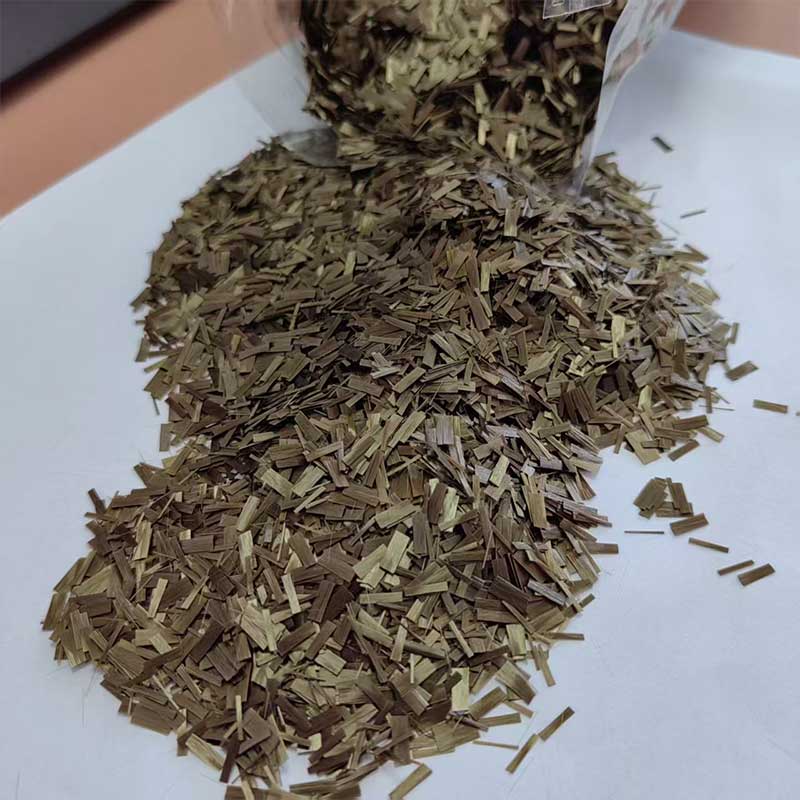
Before producing large quantities of basalt fiber reinforced concrete, confirm the following:
- The fiber specification has been approved.
- Fiber length and diameter match the trial material.
- Delivered material is dry and uncontaminated.
- Fiber dosage has been verified.
- The plant can accurately weigh or meter the fiber.
- The mixing sequence has been documented.
- Mixing time has been confirmed through trials.
- The concrete admixture system has been tested with fiber.
- Slump and air-content targets are defined.
- Pumping has been trialed where required.
- Finishing procedures are understood.
- Test specimens and sampling frequency are scheduled.
- Fiber batch numbers are recorded.
- The curing method is ready before placement begins.
This checklist turns fiber reinforcement from a product purchase into a controlled concrete-production process.
For project-specific fiber specifications, test information, packaging requirements, or bulk supply documentation, buyers can submit their requirements through the страница контактов.
ЧАСТО ЗАДАВАЕМЫЕ ВОПРОСЫ
What is basalt fiber reinforced concrete?
Basalt fiber reinforced concrete is a cement-based composite containing short basalt fibers distributed throughout the mixture. The fibers help bridge developing cracks and can improve crack control, tensile behavior, toughness, and durability.
Does basalt fiber increase concrete strength?
It can influence several mechanical properties, but results depend on fiber length, dosage, concrete composition, and testing method. Improvements in tensile, flexural, crack-control, and toughness behavior are often more relevant than compressive strength alone.
What is the best basalt fiber length for concrete?
There is no universal best length. The appropriate fiber length depends on aggregate size, concrete type, fiber dosage, mixer configuration, element dimensions, and the required reinforcement effect.
How much basalt fiber should be used in concrete?
The correct dosage should be established through mix design and laboratory trials. Copying a dosage from another project can produce poor workability or insufficient reinforcement.
Why does basalt fiber reduce slump?
Fibers increase internal surface area and interfere with aggregate and mortar movement. Higher fiber dosages can therefore make concrete more cohesive and less fluid.
Can extra water be added when concrete becomes stiff?
Uncontrolled water addition should be avoided because it changes the designed water-cementitious ratio. Workability should be adjusted through the approved mix design and compatible admixtures.
Can basalt fiber replace steel reinforcement?
Not automatically. Short basalt fibers provide distributed reinforcement, while reinforcing bars perform specific structural functions. Any replacement must be supported by appropriate engineering design and project approval.
Is basalt fiber suitable for concrete pavement?
Yes, basalt fiber can be evaluated for concrete pavement where crack control, durability, and tensile performance are important. The final mixture should be verified through project-specific testing.
What causes basalt fibers to clump?
Common causes include rapid feeding, excessive dosage, unsuitable fiber length, low concrete workability, inadequate mixing time, moisture exposure, and improper mixing sequence.
Which documents should a basalt fiber buyer request?
Depending on project requirements, buyers may request a technical data sheet, certificate of analysis, quality inspection record, safety documentation, batch information, packaging specification, and relevant third-party test reports.
Заключение
The success of basalt fiber reinforced concrete depends much more on engineering control than on simply placing fibers into a concrete mixer.
Fiber length, diameter, tensile properties, dosage, moisture condition, concrete workability, mixing sequence, dispersion, curing, and quality control all interact with one another.
The most reliable projects begin with a defined performance objective. Laboratory trials are then used to identify an appropriate fiber configuration and dosage. Full-scale batching confirms whether the mixture can be produced, transported, pumped, placed, finished, and cured consistently.
For contractors and B2B material buyers, this approach also creates a better procurement process. Instead of comparing basalt fibers only by appearance or nominal specifications, buyers can evaluate technical parameters, batch consistency, documentation, packaging, and compatibility with the actual concrete system.
When material selection and production control are connected, basalt fiber reinforced concrete can provide a practical route to improved crack control and more durable concrete for pavements, bridges, industrial facilities, precast structures, and demanding infrastructure applications.