

A concrete slab can achieve its specified compressive strength and still develop cracks, damaged joints, spalling, or poor post-cracking performance under repeated industrial traffic. This is why engineers and contractors increasingly evaluate steel fiber concrete reinforcement as part of the complete slab system rather than treating fibers as a simple additive.
The important question is not only whether steel fiber is included. Fiber geometry, tensile strength, aspect ratio, dosage, concrete workability, mixing sequence, distribution, slab design, joints, subgrade conditions, and curing all influence the final result.
For industrial floors, concrete pavement, warehouses, logistics yards, tunnels, bridge applications, and precast components, understanding these variables before procurement can prevent expensive corrections after concrete placement.
Table of Contents
Why Steel Fiber Concrete Reinforcement Is Different From Ordinary Concrete
Concrete performs extremely well in compression but is much less resistant to tensile stresses. Shrinkage, bending, impact, thermal movement, wheel loads, vibration, and subgrade movement can create tensile stresses that initiate cracks.
Traditional reinforcement typically concentrates steel in specific positions within a concrete element.
Steel fibers behave differently.
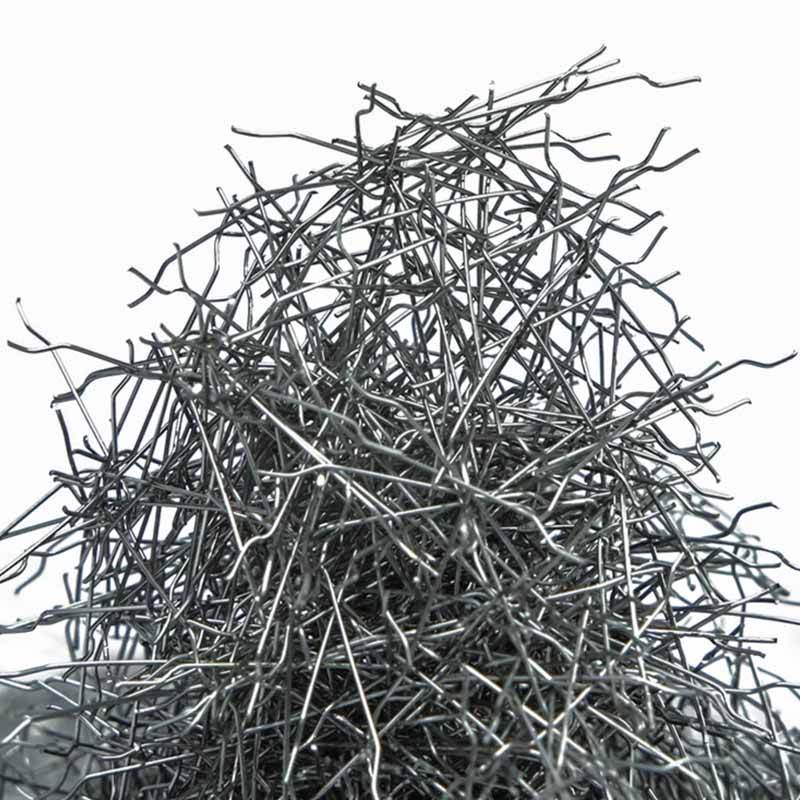
When properly mixed, thousands of short fibers are distributed throughout the concrete matrix. Instead of reinforcing one plane, steel fiber concrete reinforcement creates multidirectional crack-bridging points throughout the material.
When a microcrack begins to open, fibers crossing the crack transfer stress from one side to the other.
This mechanism can improve:
- Post-cracking toughness
- Crack-width control
- Energy absorption
- Impact resistance
- Fatigue behavior
- Resistance to localized damage
The primary benefit is therefore not simply increasing the initial compressive strength of the concrete. The more important advantage is changing how concrete behaves after cracking begins.
Technical background on the behavior and design of fiber-reinforced concrete can be found in this fiber-reinforced concrete design guidance.
The Most Important Steel Fiber Properties Buyers Should Compare
Two fibers can have the same length and still perform differently.
For meaningful procurement decisions, buyers should evaluate several properties together rather than comparing only fiber weight or appearance.
Fiber Length
Fiber length affects anchorage, distribution, crack bridging, and compatibility with the aggregate system.
Longer fibers may provide stronger bridging across developing cracks, but excessively long fibers can create mixing and distribution problems depending on aggregate size and batching equipment.
Equivalent Diameter
Diameter influences fiber stiffness and aspect ratio.
Very fine fibers can provide more individual fibers per unit mass, while thicker fibers may offer different pull-out and handling characteristics.
Neither diameter alone nor fiber count alone determines performance.
Aspect Ratio
Aspect ratio is generally defined as fiber length divided by equivalent diameter.
It is one of the most important variables in steel fiber concrete reinforcement because it influences anchorage and interaction between the steel fiber and cementitious matrix.
A higher aspect ratio can improve reinforcing efficiency, but increasing it too far may make dispersion more difficult.
The best fiber is therefore not automatically the fiber with the highest aspect ratio.
Tensile Strength
During crack opening, the fiber is subjected to tensile stress and pull-out forces.
The required fiber tensile strength should be selected according to the expected concrete strength, anchorage mechanism, structural design, and performance requirements.
Fiber Shape
End geometry can significantly influence pull-out behavior.
Common configurations include:
- Hooked-end fibers
- Straight fibers
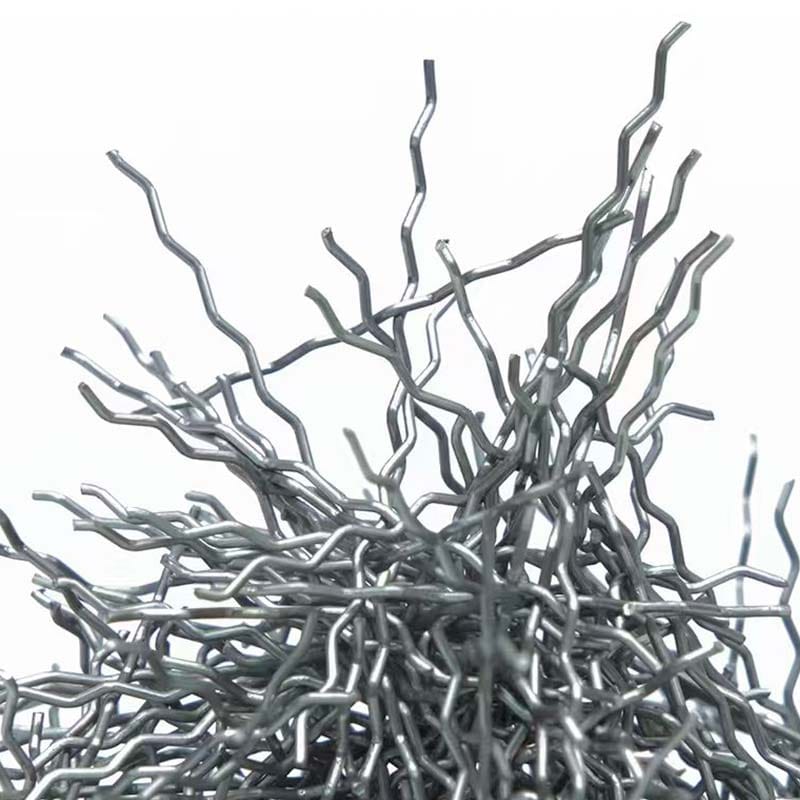
- Wavy or crimped fibers
- Bundled fibers
Buyers can review available steel fiber for concrete reinforcement specifications when comparing fiber geometry for pavement, industrial floors, bridge decks, tunnels, and precast applications.
Hooked vs Straight vs Wavy Steel Fiber
Fiber shape should match the required performance and construction process rather than being chosen simply because one type appears more complex.
| Fiber Type | Main Characteristic | Typical Consideration |
|---|---|---|
| Hooked-end | Strong mechanical anchorage | High-toughness slabs and heavy-load applications |
| Straight | Simple geometry | General reinforcement and easier mixing |
| Wavy / Crimped | Mechanical interlocking along fiber | Concrete panels and specialized applications |
| Bundled | Fibers held together before mixing | Easier batching and controlled dispersion |
Hooked-End Fiber
Hooked ends increase resistance to fiber pull-out after cracking.
This makes hooked fibers useful where post-cracking toughness and load transfer are important.
However, geometry should still be evaluated alongside tensile strength, aspect ratio, dosage, and concrete mix design.
Straight Fiber
Straight fibers rely more heavily on bond along the fiber surface.
They may be easier to manufacture and handle, but project engineers should verify whether their bond and pull-out characteristics meet the required structural performance.
Wavy Fiber
Crimped or wavy geometry creates additional mechanical resistance inside the concrete.
Performance depends on wave geometry, length, diameter, tensile strength, and how effectively the fibers disperse.
Bundled Fiber
Bundled products can improve batching efficiency because multiple fibers are temporarily held together and separate during mixing.
For large batching plants, consistent dispersion can sometimes be more important than selecting an extremely aggressive fiber geometry.
Steel Fiber Concrete Reinforcement for Industrial Floors
Industrial flooring is one of the most practical applications for steel fiber concrete reinforcement.
Warehouses, factories, logistics centers, workshops, distribution facilities, loading areas, and heavy-duty floors can experience:
- Forklift traffic
- Concentrated rack loads
- Repeated wheel loads
- Abrasion
- Impact
- Joint movement
- Shrinkage
- Dynamic loading
A floor should therefore be designed as a system.
Steel fiber cannot compensate for a weak subgrade, poor concrete quality, incorrect slab thickness, uncontrolled joints, or inadequate curing.
Crack Control
Fibers can help distribute tensile stresses across many small cracks rather than allowing individual cracks to widen rapidly.
This post-cracking control is especially useful in large floor areas where serviceability and long-term maintenance are major concerns.
Impact and Toughness
Heavy objects, machinery, forklifts, and industrial operations can expose concrete to impact loading.
Steel fibers improve energy absorption, helping concrete retain integrity after initial cracking.
Joint Performance
Joint edges are often vulnerable to damage under hard-wheel traffic.
Steel fiber may contribute to overall slab toughness, but joint spacing, load transfer, saw-cut timing, joint filling, and maintenance remain separate design issues.
A good fiber system does not eliminate the need for proper joint engineering.
Is More Steel Fiber Always Better?
No.
One of the most common mistakes in steel fiber concrete reinforcement is assuming that increasing fiber dosage automatically produces a better slab.
A higher dosage may increase post-cracking performance, but it can also introduce construction challenges.
Potential effects include:
- Lower workability
- Difficult pumping
- Fiber balling
- Uneven distribution
- More difficult finishing
- Higher sensitivity to mixing sequence
- Increased risk of exposed fibers at the surface
Fiber dosage should therefore be based on required residual strength or toughness, not a “more is better” assumption.
Start With Performance Requirements
Before selecting dosage, define what the slab must achieve.
Depending on the project, engineers may consider:
- Flexural performance
- Residual strength
- Crack-width control
- Toughness
- Fatigue resistance
- Impact performance
- Slab thickness
- Wheel loading
- Rack loading
- Subgrade support
Steel fiber concrete reinforcement should then be designed to meet those requirements.
Trial Mixing Matters
A laboratory mixture does not always behave exactly like full-scale production.
Before major placement, trial batches can confirm:
- Workability
- Fiber dispersion
- Mixing time
- Pumpability
- Finishing behavior
- Surface appearance
- Actual dosage control
This is particularly important when changing fiber geometry, dosage, aggregate grading, mixer type, or admixture system.
Why Steel Fibers Form Balls During Mixing
Fiber balling is one of the most avoidable problems in fiber-reinforced concrete.
It occurs when fibers collect into dense clusters rather than dispersing uniformly through the mixture.
A fiber ball provides little useful reinforcement and can create a localized defect.
Common Causes of Fiber Balling
Typical causes include:
- Adding fibers too quickly
- Adding all fibers to one location
- Insufficient mixer capacity
- Very high fiber aspect ratio
- Excessive fiber dosage
- Incorrect mixing sequence
- Low-workability concrete
- Poor aggregate grading
- Moisture or packaging damage
- Insufficient mixing time
The quality of steel fiber concrete reinforcement depends on distribution, not merely the total mass placed into the mixer.
A Better Batching Approach
Depending on equipment and project procedures, fibers may be introduced gradually while aggregates and other concrete components are moving through the mixer.
The objective is to distribute fibers before they have an opportunity to interlock with one another.
For bundled fibers, the mixing process must provide sufficient energy and time for bundles to separate.
Do Not Fix Balling With Excess Water
Adding uncontrolled water at the jobsite may temporarily make the mixture easier to handle, but it changes the designed water-cementitious materials ratio and can affect strength, durability, shrinkage, and consistency.
Workability should be managed through the approved mix design and compatible admixture system.
How Steel Fiber Changes Concrete Workability
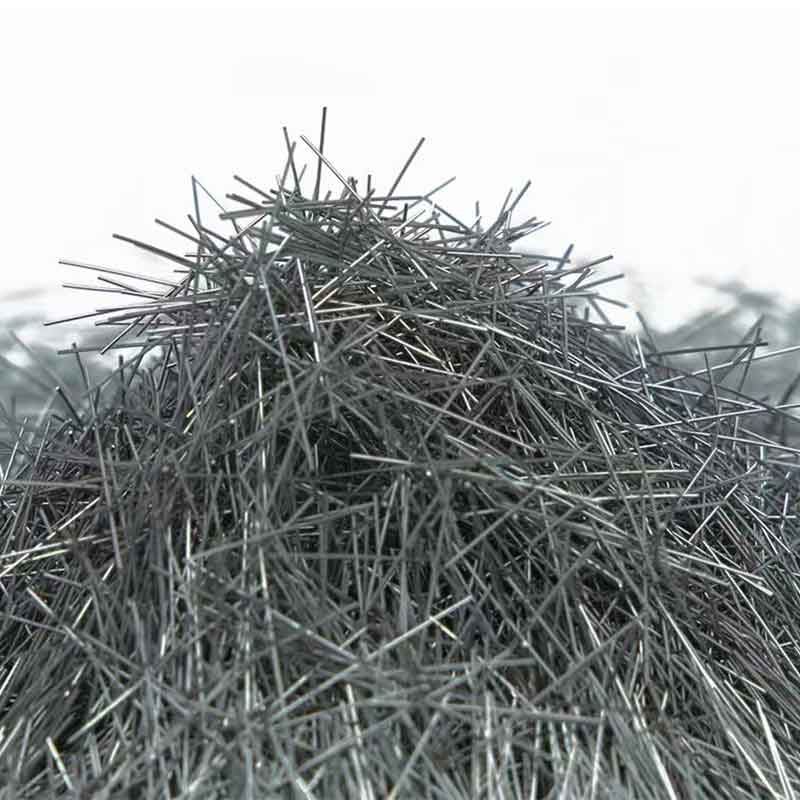
Steel fibers physically interfere with the movement of aggregate and mortar.
As dosage or aspect ratio increases, the concrete may appear stiffer even when its water content has not changed.
This does not automatically mean the mixture requires more water.
A properly designed steel fiber concrete reinforcement mixture should consider:
- Aggregate grading
- Maximum aggregate size
- Paste volume
- Water-cementitious ratio
- Chemical admixtures
- Fiber dosage
- Fiber geometry
- Placement method
- Pumping distance
- Finishing requirements
Where workability improvement is required, contractors may also evaluate a compatible powdered water reducer as part of an approved concrete mix design.
Any admixture and fiber combination should be tested before site production.
How to Evaluate Fiber Distribution
A specification can contain excellent fiber properties while the actual concrete performs poorly because fibers are not distributed evenly.
This makes distribution one of the most important quality-control issues.
What Good Distribution Looks Like
After mixing, fibers should appear reasonably uniform throughout the concrete without obvious clusters.
Contractors should not see:
- Large fiber balls
- Areas almost free of fiber
- Large numbers of fibers collected at mixer edges
- Significant variation between batches
- Bundles that have not separated
- Large differences between beginning and end of discharge
Research and technical guidance increasingly emphasize fiber distribution and orientation because both influence how effectively fibers cross cracks.
Why Orientation Matters
A fiber contributes most effectively when it intersects a developing crack.
Concrete placement methods, vibration, wall boundaries, member thickness, flow direction, and finishing can influence orientation.
This means identical fiber dosages can produce different effective reinforcement depending on the geometry and placement method.
The industry also publishes guidance specifically addressing fresh-state properties and fiber dispersion.
Can Steel Fiber Replace Rebar or Wire Mesh?
Sometimes steel fibers can reduce or replace certain conventional reinforcement, but this should never be assumed without structural design.
The answer depends on what the reinforcement is intended to do.
Slab-on-Ground Applications
For some slabs-on-ground, steel fiber concrete reinforcement may be designed as the primary distributed reinforcement for crack control and post-cracking capacity.
The fiber dosage and slab thickness must be determined from loading, subgrade support, concrete properties, joint spacing, and required performance.
Structural Elements
Beams, columns, suspended slabs, retaining structures, and other structural members may rely on conventional reinforcing steel for specific flexural, shear, continuity, anchorage, or ductility requirements.
Fibers should not automatically replace reinforcement required by structural design codes.
Combination Systems
Some projects use both conventional reinforcement and steel fibers.
This can be appropriate where fibers are required for toughness or crack control while reinforcing bars serve primary structural functions.
The important principle is simple:
Steel fiber concrete reinforcement must be treated as an engineered reinforcement system, not an informal substitution.
Where Steel Fiber Concrete Reinforcement Makes the Most Sense
Steel fiber can be evaluated in many concrete applications, but the greatest value typically appears where cracking, repeated loading, abrasion, impact, or construction efficiency are important.
Heavy-Duty Industrial Floors
Manufacturing facilities and warehouses can benefit from improved toughness and crack control under repeated wheel loads.
Logistics and Distribution Centers
High-frequency forklift traffic and concentrated storage loads make slab performance critical to daily operations.
Concrete Pavement
Roads, yards, ports, terminals, and heavy-duty pavement can use fiber reinforcement where improved post-cracking behavior is required.
Tunnel Shotcrete and Linings
Fibers provide distributed reinforcement throughout sprayed concrete and tunnel lining systems.
Technical literature on steel fiber reinforced concrete mixing, placement, and finishing provides useful background for infrastructure applications.
Precast Concrete
Fibers can improve toughness and crack control in selected precast products while supporting more distributed reinforcement within complex shapes.
Bridge and Infrastructure Concrete
Bridge decks and other infrastructure components may use fiber systems where approved design and project specifications require additional cracking resistance or toughness.
More infrastructure reinforcement products are available through the roadway material additives and reinforcement category.
Steel Fiber Procurement Checklist
A buyer should not approve steel fiber concrete reinforcement material based only on a sample image and fiber length.
A technical purchase specification should clearly define the important properties.
| Item to Verify | Why It Matters |
| Fiber type | Identifies manufacturing and geometry category |
| Length | Affects anchorage and dispersion |
| Equivalent diameter | Influences aspect ratio and fiber count |
| Aspect ratio | Important for reinforcing efficiency |
| Tensile strength | Supports crack-bridging performance |
| End geometry | Influences pull-out resistance |
| Bend performance | Helps verify fiber ductility |
| Surface condition | Can affect bond and storage quality |
| Packaging format | Influences batching and site handling |
| Batch identification | Provides traceability |
| Test report | Supports technical verification |
| Consistency between lots | Critical for long-duration projects |
The active steel fiber specification for fiber-reinforced concrete provides a useful reference covering fiber dimensions, tolerances, physical properties, inspection, certification, and packaging.
Request Actual Batch Data
A general technical data sheet describes the product range.
For project procurement, buyers should also request batch-specific or shipment-specific quality documents where required.
Useful records may include:
- Certificate of analysis
- Product specification
- Material safety documentation
- Production batch number
- Fiber length test
- Diameter or equivalent diameter data
- Tensile performance
- Bend test
- Packaging details
- Quantity verification
Check Packaging Before Acceptance
Damaged packaging can lead to contamination, moisture exposure, corrosion, mixed batches, or material loss.
For major projects, the receiving team should record:
- Lot numbers
- Number of packages
- Package condition
- Manufacturing information
- Storage location
- Delivery date
This gives steel fiber concrete reinforcement full traceability from supplier to concrete placement.
Common Mistakes That Reduce Steel Fiber Performance
Selecting Fiber Only by Length
Length alone does not define performance. Diameter, aspect ratio, tensile strength, shape, anchorage, and dosage should be evaluated together.
Copying Dosage From Another Project
A warehouse slab and a tunnel lining may use completely different design assumptions.
Dosage should follow the required engineering performance.
Ignoring Concrete Mix Compatibility
A fiber that performs well in one mix may create workability problems in another.
Trial batching is essential.
Adding Fiber Without Calibrated Dosing
Manual estimation introduces unnecessary variation.
Actual fiber consumption should be checked against theoretical consumption during production.
Ignoring Finishing Requirements
Some architectural or highly polished surfaces require special attention to fiber exposure near the surface.
Placement and finishing procedures should be planned before pouring.
Treating Fibers as a Cure for Every Crack
Steel fiber improves crack behavior, but it does not eliminate every cause of concrete cracking.
Subgrade settlement, excessive water, thermal movement, incorrect joints, poor curing, weak concrete, excessive loading, and structural movement still require proper engineering solutions.
Questions to Send a Steel Fiber Supplier
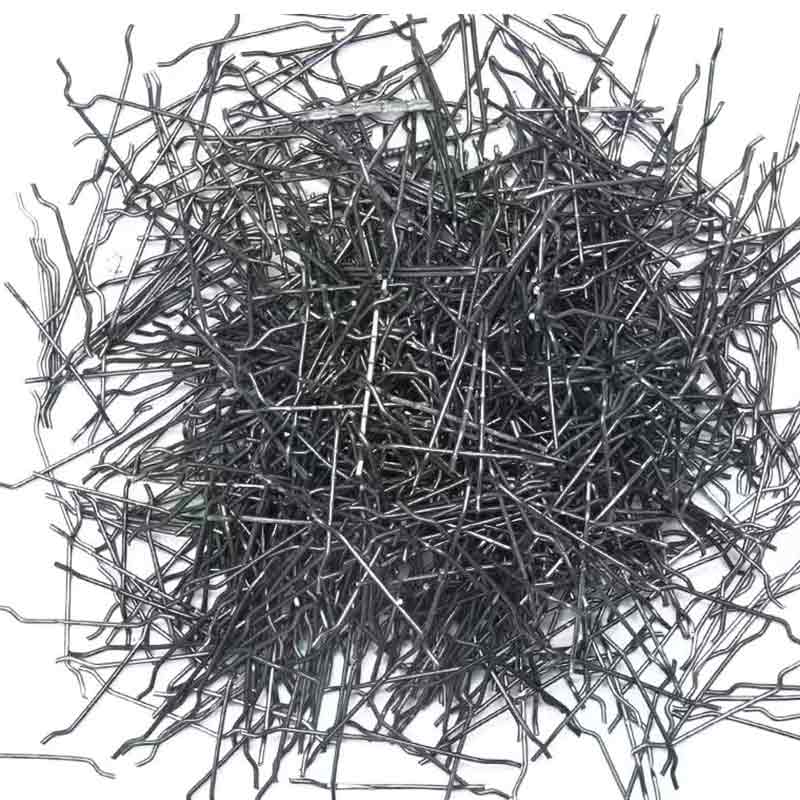
A useful inquiry should contain enough information for the supplier to understand the project.
Instead of asking only for “steel fiber,” provide:
- Application type
- Concrete strength class
- Slab or element thickness
- Fiber geometry required
- Fiber length and diameter
- Aspect ratio
- Required tensile strength
- Planned dosage
- Applicable standard
- Mixing plant type
- Packaging requirements
- Quantity requirement
- Destination
- Required quality documents
- Project schedule
For application recommendations, documentation, and bulk project requirements, buyers can submit these details through the contact page.
FAQ
What is steel fiber concrete reinforcement?
Steel fiber concrete reinforcement uses short steel fibers distributed throughout concrete to improve toughness, crack control, energy absorption, and post-cracking behavior.
Does steel fiber increase compressive strength?
It may influence compressive behavior, but compressive-strength improvement is not usually the main reason for using steel fibers. Their major benefits relate to tensile cracking, toughness, post-cracking capacity, impact resistance, and fatigue performance.
What type of steel fiber is best for industrial floors?
Hooked-end fibers are commonly evaluated for heavy-duty slabs because their end geometry provides mechanical anchorage. The final choice should still be based on slab design, required residual strength, dosage, mixing capability, and project specification.
How much steel fiber should be added to concrete?
There is no universal dosage. Steel fiber concrete reinforcement dosage depends on fiber geometry, required structural or residual performance, slab design, loads, concrete mixture, and applicable engineering standard.
Why are steel fibers glued or bundled together?
Bundling can make transportation, dosing, and mixing easier. The bundles are designed to separate during concrete mixing so that individual fibers become distributed throughout the concrete.
Can steel fiber completely eliminate concrete cracks?
No. Fibers primarily help control crack development and post-cracking behavior. Concrete can still crack because of shrinkage, thermal movement, structural loading, settlement, joints, curing problems, or other factors.
Does steel fiber make concrete harder to pump?
Higher fiber dosage or aspect ratio can reduce workability and may affect pumping. Concrete mix design, aggregate grading, pumping equipment, admixtures, and fiber feeding procedures should be evaluated during trial production.
Can steel fiber replace wire mesh?
It can replace or reduce certain reinforcement in some engineered slab systems, but the substitution must be approved by the project designer. The two systems should not be considered automatically equivalent.
How should steel fiber be stored?
Packages should remain dry, protected from weather, clearly identified by batch, and stored in conditions that prevent contamination and corrosion before concrete production.
Conclusion
Successful steel fiber concrete reinforcement starts long before fibers enter the mixer.
The project team first needs to define the required performance, then match fiber length, equivalent diameter, aspect ratio, tensile strength, anchorage geometry, and dosage to the concrete system.
Mixing and construction are equally important. Even high-quality fibers cannot perform as intended if they form balls, distribute unevenly, are added at inconsistent dosages, or are placed in a poorly designed concrete mixture.
For B2B buyers, the best procurement process therefore combines technical specifications with batch traceability, quality documentation, trial mixing, and clear communication between the fiber supplier, concrete producer, engineer, and contractor.
When those controls are in place, steel fiber concrete reinforcement becomes more than an additive. It becomes an engineered method for improving crack control, toughness, and long-term concrete performance in demanding infrastructure and industrial applications.