


Table of Contents
- Why rutting appears in heavy traffic pavement
- Where an anti-rutting agent fits
- Project conditions that need extra attention
- How to check compatibility before paving
- Buying checklist for road contractors
Rutting is one of the most visible failures on asphalt roads that carry slow, heavy, or channelized traffic. Wheel paths become depressed, water collects in the surface, and drivers begin to feel the deformation before the pavement has reached its expected service life. For road contractors and asphalt plant operators, the practical question is not only why rutting happens, but how the mix can be designed and produced to resist it. An anti-rutting agent is one material option when the project requires stronger high-temperature stability.
This article focuses on how to use an anti-rutting agent in a realistic procurement and production decision. It does not replace laboratory mix design, pavement engineering, or local specification review. Instead, it explains what the additive is expected to do, where it is most useful, and what buyers should confirm before using it in highways, bus lanes, intersections, logistics parks, port roads, and other heavy-load pavement.
Why rutting appears in heavy traffic pavement
Asphalt rutting usually develops when the pavement structure or asphalt mixture cannot resist repeated shear stress at high temperature. Slow-moving trucks, braking zones, steep grades, and turning areas are especially demanding because loads stay on the surface longer and push the mixture sideways. The Federal Highway Administration pavement resources explain the wider pavement context, but field teams often see the same practical pattern: the surface looks stable at first, then wheel paths begin to deform under repeated traffic.
An anti-rutting agent is used to improve the deformation resistance of asphalt mixtures. It can help the mix maintain shape under heat and heavy loading by contributing to stiffness, elasticity, and aggregate-binder interaction. However, an anti-rutting agent should be treated as part of the total mix design, not as a quick repair for poor aggregate gradation, weak base layers, or incorrect compaction.
Where an anti-rutting agent fits
The best use cases are projects where rutting risk is predictable before construction. Bus stops, toll stations, intersections, container yards, industrial entrances, and climbing lanes are typical examples. In these areas, a standard asphalt mixture may meet basic requirements but still struggle under slow, concentrated loads. Adding an anti-rutting agent can improve the high-temperature performance target when the laboratory design confirms the dosage and mixture behavior.
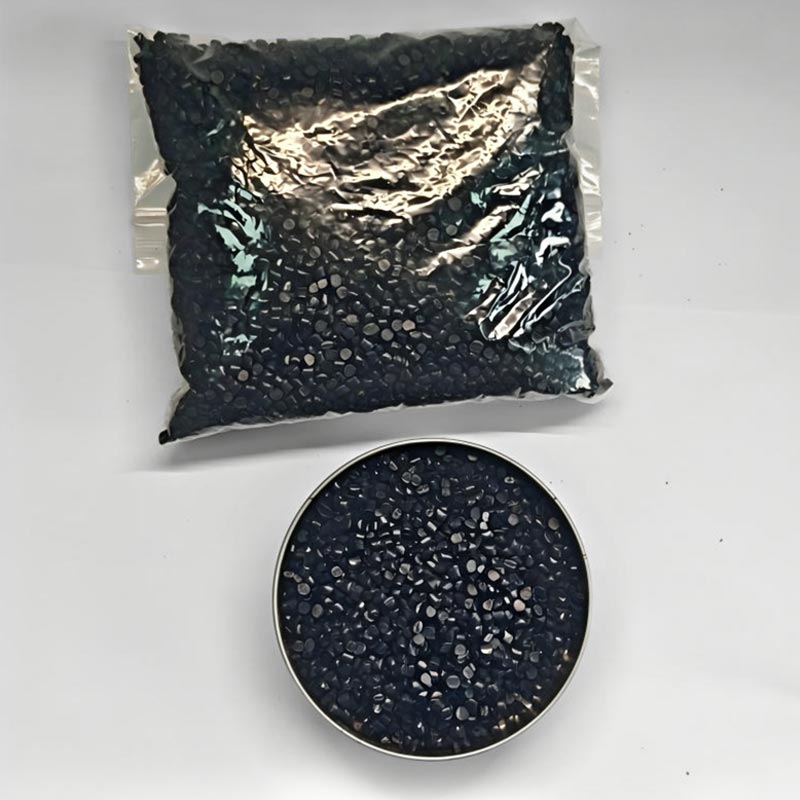
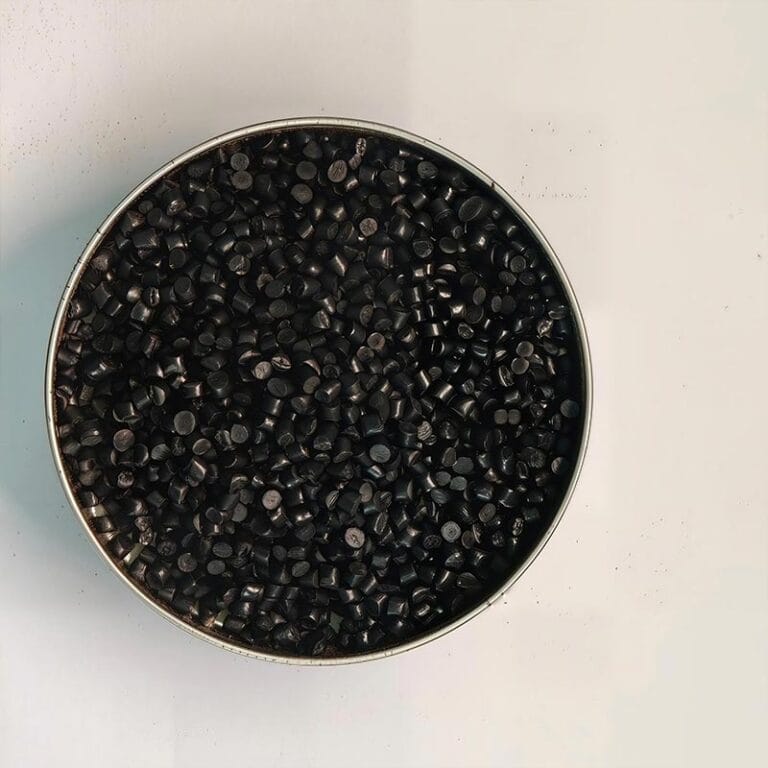
Luxin’s Asphalt Anti-Rutting Agent is positioned for asphalt pavement where rutting resistance is a main concern. For binder-rich mixes that also need drain-down control, a fiber stabilizer such as Lignin Fiber may have a different role. The materials are not interchangeable: one targets deformation resistance, while the other mainly helps binder retention in mixtures such as SMA.
| High-risk area | Why rutting risk increases |
| Bus lanes and stops | Slow repeated loading and frequent braking |
| Port and logistics roads | Heavy axle loads and channelized traffic |
| Intersections | Turning, braking, and acceleration stress |
| Long uphill grades | Slow trucks and high pavement temperature |

Project conditions that need extra attention
Temperature is one of the first project conditions to review. Pavement in hot regions, exposed bridge approaches, and urban roads with limited air movement may require higher deformation resistance. Traffic speed also matters. Slow traffic can be harder on the asphalt layer than faster traffic because the load remains in contact with the surface longer. These conditions are where an anti-rutting agent may provide practical value.
The additive should also match the production process. Asphalt plant operators need to know the feeding point, mixing time, storage behavior, and whether the anti-rutting agent disperses evenly. If the additive is not properly introduced, performance can become inconsistent even when the material itself is suitable. Trial production is often the most useful bridge between a product data sheet and a real paving shift.
How to check compatibility before paving
Before full-scale paving, the project team should confirm compatibility with the selected binder, aggregate gradation, reclaimed material policy, and plant temperature. The Asphalt Institute provides general engineering references for asphalt questions, while project specifications should guide actual testing. The anti-rutting agent should be evaluated through the same discipline as any other asphalt additive: laboratory design first, then plant verification.
A practical check is to look for both performance and workability. A mixture that becomes too stiff may create handling, compaction, or surface texture problems. A mixture that remains easy to compact but lacks rutting resistance may not solve the original issue. The right anti-rutting agent dosage is the point where deformation resistance improves without creating new construction problems.
Field signs that the mix needs adjustment
Field feedback is important because rutting problems are rarely caused by one factor alone. If the asphalt surface shows early shoving near stop lines, dark and soft wheel paths, or deformation after a short period of heavy service, the mix design should be reviewed before the next production cycle. The review may include aggregate interlock, binder grade, air voids, compaction practice, and whether an anti-rutting agent is suitable for the next section.
Plant records can also reveal useful patterns. High discharge temperature, long silo storage, delayed trucking, or inconsistent additive feeding can change field behavior. A good production team records these details and compares them with test results. When an anti-rutting agent is used, the plant should keep the feeding method stable from trial batch to full production so the material does not become another uncontrolled variable.
Contractors should also think about maintenance access. A port road, bus lane, or industrial entrance may be difficult to close once operations begin. Spending more time on mix verification before paving can reduce later disruption. In that sense, selecting an anti-rutting agent is not only a material purchase; it is part of risk management for roads that will be hard to repair under live traffic.
For broader pavement references, buyers can also review resources from the Transportation Research Board and the National Asphalt Pavement Association. These sources can help project teams frame questions before confirming local specifications.
Buying checklist for road contractors
- Confirm the project rutting risk: heavy loads, high temperature, slow traffic, or braking zones.
- Ask how the anti-rutting agent should be fed into the asphalt plant.
- Review packaging, storage, and moisture protection before shipment.
- Run laboratory and plant checks before relying on full production.
- Use the Applications page to match material selection with road conditions.
- Contact the supplier through Contact Us with mix type, project location, and estimated quantity.
The most reliable result comes from treating an anti-rutting agent as an engineering material, not a last-minute purchase. When the additive, mix design, plant process, and field compaction are aligned, asphalt pavement has a better chance of resisting rutting under demanding traffic.